Doss Alto, 21 September 1918: the medic Karel Nováček and the Czechoslovak legionaries who died for a homeland yet to be built
A nation that did not yet exist
In September 1918, Czechoslovakia was not yet a state. It would be officially born only on 28 October of that year, out of the dissolution of the Austro-Hungarian Empire at the end of the First World War. And yet hundreds of young Czechs and Slovaks had already chosen which side to be on — and were paying for that choice with their lives, long before their homeland had a name, a border, a flag.
At that time a Czechoslovak state existed only in the aspirations of the many patriots who longed for the independence of Bohemia, Moravia and Slovakia from the Empire. Committees of Czech and Slovak patriots had sprung up immediately after the outbreak of the conflict in France, the United States, Russia and England. The First World War had offered these peoples a real opportunity to turn the dream into reality, through arms — and through blood.
October
The birth of the Czechoslovak Legion in Italy
The story of the Czechoslovak legionaries on the Italian front began with difficulty, amid mistrust and prejudice. The Czech and Slovak soldiers who deserted from the imperial army, or who were taken prisoner and asked to cooperate with the Italians, were viewed with suspicion by the commands. They were, after all, enemy soldiers, and the military tradition of the time did not accept betrayal, however much it was driven by patriotic ideals.
The turning point came gradually. At the beginning of 1916 Milan Rastislav Štefánik arrived in Italy from Paris — a talented Slovak astronomer, aircraft pilot and diplomat — and launched an intense campaign of propaganda in favour of the Czechoslovak cause. His efforts soon had an effect: desertions from the imperial army multiplied, and the internment camps of southern Italy — Sulmona, Padula, Altamura, Salerno — filled with volunteers eager to fight against Vienna. There were already almost twelve thousand of them when the decisive agreement was signed.
| February 1918 | Volunteer labour battalions are formed. The former prisoners begin training in the camps of southern Italy. |
| 21 April 1918 | The Czechoslovak National Council concludes an agreement with the Italian government for the formation of an autonomous Army Corps: 350 officers and 12,500 other ranks. |
| May 1918 | The Corps is organised into the 6th Czechoslovak Division. Its units fight on the Piave during the Austrian offensive of June, distinguishing themselves at Fossalta and on the Montello. |
| 15 August 1918 | The battalions of the 33rd and 34th Czechoslovak Regiments take up position in the Altissimo sector, on the northern edge of Lake Garda, one of the most delicate points of the front. |
The Czechoslovak legionaries knew perfectly well what awaited them if captured. They were not regular soldiers fighting for a recognised army: in the eyes of the Empire they were deserters, traitors to the Crown, and were treated as such. Summarily tried, sentenced for high treason, hanged — just like the Italian irredentists Cesare Battisti, Fabio Filzi and Nazario Sauro. And yet they fought all the same.
The Doss Alto: the height that controlled Lake Garda
The Doss Alto di Nago is a 703-metre height on the northern slopes of Monte Baldo, overlooking Lake Loppio and the Sarca plain. Whoever held it could observe every movement along the approaches to Lake Garda from the north — an observation and control point of prime strategic importance for both armies.
The height had been taken by Italian Alpine troops in December 1915 and then equipped with a long defensive tunnel cut into the rock, with loopholes, a small mountain gun and a ventilation shaft that came out at the surface with an observation post and a machine-gun position. The position, however, did not stay secure for long: on 15 June 1918 the Austrians retook it in a surprise attack. They lost it again on 3 August, when Italian assault units, lowering themselves with great daring down the ventilation shaft, surprised and captured the entire garrison of the tunnel.
| “ |
In the first days after their arrival the legionaries devoted themselves mainly to repairing the damaged trenches and to reconnaissance. The presence of these “deserters” did not escape Austro-Hungarian notice: the Doss Alto and the nearby Doss Casino immediately became favoured targets of the imperial artillery. They knew those soldiers: they had fought alongside them until shortly before. |
Then, on 15 August 1918, it was the turn of the Czechoslovak legionaries of the 33rd Regiment to garrison that difficult and contested height. They were soldiers in Italian uniform, but with their hearts turned towards a homeland that did not yet exist. In the days that followed they repaired the trenches, carried out reconnaissance and adapted to the terrain. And they waited.
The battle of 21 September 1918: the great attack
The great Austro-Hungarian attack on the Doss Alto began in the early hours of 21 September 1918. It opened with hours of intense, systematic bombardment concentrated on the positions of the 33rd Czechoslovak Rifle Regiment. When the artillery fell silent, the imperial infantry moved to the assault, well organised and determined to retake the height.
In the first phase of the attack things went badly for the defenders. The Austro-Hungarian units quickly occupied the forward observation post of Roncola — the strategic trench that controlled all the approaches to the Doss Alto — and captured some legionaries. Lieutenant Oldřich Trojánek, commander of the forward post, faced an atrocious choice: surrender, with the certainty of being hanged as a traitor, or death. He chose death: he took his own life with a pistol shot rather than be taken prisoner.
The Austrian units forced their way as far as the main defences. The legionaries withdrew into the cavern, which was held with determination under the command of Lieutenant Jindřich Varhaník. The signal rockets had been damaged by damp and would not fire. Only the third rocket, still intact, succeeded in calling up the support of the Italian artillery — and the attackers were forced to withdraw.
In the afternoon, the reinforced Czechoslovak units retook Roncola. By evening the whole of the Doss Alto was once again firmly in the legionaries’ hands. It was a victory, recognised and appreciated by the Italian command. But the price paid was high: seven legionaries killed, thirty-one wounded, five taken prisoner. Austro-Hungarian losses were far greater — some fifty dead, ninety wounded, sixty prisoners — but these were losses of soldiers fighting for their emperor, not of men who risked the gallows.
prisoners
Karel Nováček: the medic who tended the wounded

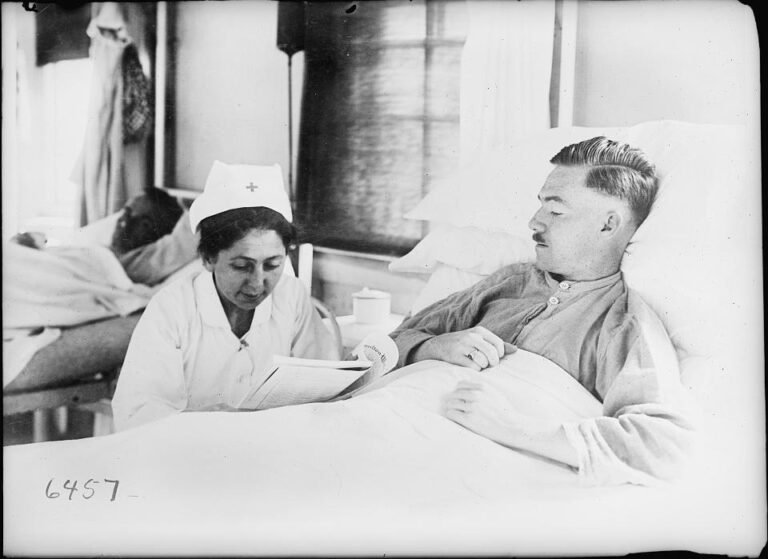
One of the five prisoners was Karel Nováček, medic of Patrol C. He was not a combatant in the strict sense of the word: his task was to tend the wounded, not to shoot. A farmer by trade, born on 15 October 1879 at Břežany, in southern Bohemia, father of four, he had been called up and assigned to the Imperial Infantry Regiment no. 11 of Písek. With that regiment he had reached the Italian front, where in November 1916 he had been taken prisoner.
Held in the internment camp of Padula — the ancient complex of the Certosa di San Lorenzo, in the Cilento — Nováček had had time to reflect, to get to know other Czech and Slovak prisoners and to come to his own decision. In April 1918 he had applied to join the newly forming Czechoslovak legions. A month later he was assigned to the 32nd Regiment, then to the 2nd Company of the 33rd Regiment, with which he was sent in September to defend the positions on the Doss Alto.
| “ |
During the fighting for Roncola, Nováček was captured unarmed while he continued to the very last to carry out his duties as a medic, tending his wounded comrades. He wore the Red Cross armband clearly visible on his arm — a symbol which, under international conventions, should have protected him. |
| Born | 15 October 1879 at Břežany, southern Bohemia. A farmer by trade. Father of four. |
| Called up | Assigned to the Imperial Infantry Regiment no. 11 of Písek. Taken prisoner on the Italian front in November 1916. |
| Volunteer | April 1918: application to enlist at the Padula camp. Assigned to the 2nd Company of the 33rd Czechoslovak Regiment as patrol medic. |
| Captured | 21 September 1918, Roncola (Doss Alto). Unarmed, while giving aid to the wounded with the Red Cross armband on his arm. |
| Executed | 22 September 1918, Via Prabi, Arco (TN). Hanged from an olive tree. The last execution of a Czechoslovak legionary in the entire conflict. |
The summary trial and the hanging
On the very evening of 21 September, the five prisoners were moved under cover of night to Ceniga and then to Arco, where they were tried by a field court martial. The trial was summary, as always happened in such cases: it was not a matter of establishing facts but of carrying out a sentence already written. They were deserters from the imperial army; they had fought alongside the enemy. The verdict was a foregone conclusion.
Antonín Ježek, Karel Nováček, Jiří Schlegl and Václav Svoboda were sentenced to death by hanging. According to testimony gathered later, during the night-time interrogation they behaved with extraordinary calm and courage. But it was Nováček who was the most fearless of all.
| “ |
Nováček answered the judges’ questions laconically and protested against his detention and the trial, arguing that his capture violated international conventions — and he showed his Red Cross armband. The court took no account of it. Aiding the wounded was no mitigating circumstance: he was still an enemy, a traitor, a deserter. His plea for clemency was rejected. |
The sentence was carried out at dawn on 22 September 1918 at the place called Via Prabi, in Arco, in a clearing among the olive trees below the town’s castle. The four were hanged from the olive trees. It was the last execution of Czechoslovak legionaries in the entire conflict. Thirty-six days remained before the birth of the state for which they had died.
| Antonín Ježek | Legionary of the 2nd Company of the 33rd Czechoslovak Regiment. Captured at Roncola on 21 September 1918. |
| Karel Nováček | Medic of Patrol C. Captured unarmed while tending the wounded. The most courageous during the trial: he protested by showing his Red Cross armband. |
| Jiří Schlegl | Legionary of the 2nd Company of the 33rd Czechoslovak Regiment. Captured at Roncola on 21 September 1918. |
| Václav Svoboda | Legionary of the 2nd Company of the 33rd Czechoslovak Regiment. Captured at Roncola on 21 September 1918. |
It was not an isolated case. Executions of Czechoslovak legionaries in the last months of the conflict numbered about sixty, spread along the whole front line: thirty-nine on the Piave, fifteen at Conegliano, four here at Arco. The young men were hanged from age-old trees — mulberries, olives, horse chestnuts — as if the choice to fight for one’s own freedom were the most infamous crime imaginable.
THE STORY OF KAREL NOVÁČEK IS DOCUMENTED ON THE VÁLEČNÉ HROBY — WAR GRAVES — PORTAL OF THE MINISTRY OF DEFENCE OF THE CZECH REPUBLIC
Memory: from Arco to Prague, by way of Břežany
In January 1919, while Europe was still counting its dead and redrawing its borders, a monument was erected at Prabi on the very site of the executions. It was an immediate, almost urgent gesture, as if people understood that this story risked being forgotten all too quickly.
The olive-tree clearing at Prabi is today territory of the Czech Republic — a small patch of Czech soil in Italy, donated by the Municipality of Arco as a sign of respect and brotherhood. Every year, in September, the Alpini Groups of Arco and Nago, together with a diplomatic and military delegation from Prague, gather here for the commemorative ceremony. It is one of those appointments with memory that withstand time, that are handed down, that refuse to be overwhelmed by indifference.
| “ |
In 1921 the remains of the four legionaries were exhumed and brought home. On 24 April 1921 Karel Nováček, Antonín Ježek, Jiří Schlegl and Václav Svoboda were laid to rest with honours in the Cemetery of Honour of the Italian legionaries within Olšany Cemetery in Prague. In Břežany, Nováček’s home village, a memorial to the fallen of the First World War still bears his name today. |
April
Karel Nováček was a forty-year-old farmer, a family man, who had chosen to believe in something greater: a free nation that did not yet exist. When he was captured he was bandaging the wounded. When he was tried he protested by showing his Red Cross armband. When he was hanged, Czechoslovakia had not yet been born.
It would be born thirty-six days later.
Sources:
Notes on the source:
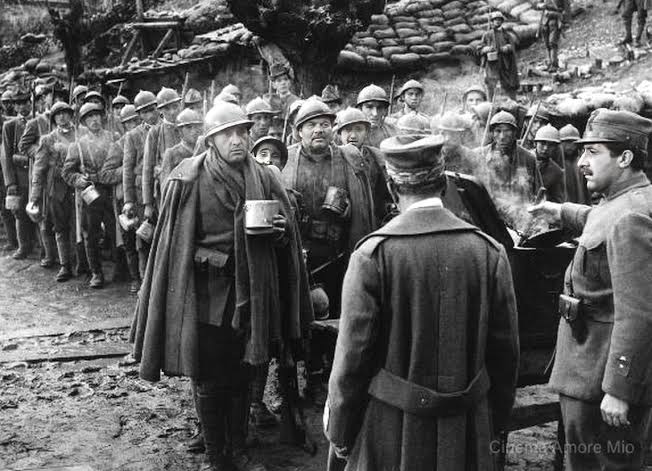
Czechoslovak legionaries of the 33rd Regiment in Italian Alpini uniform.
Further reading, a related article: 24 March 1944 – The Malga Bala Massacre.