
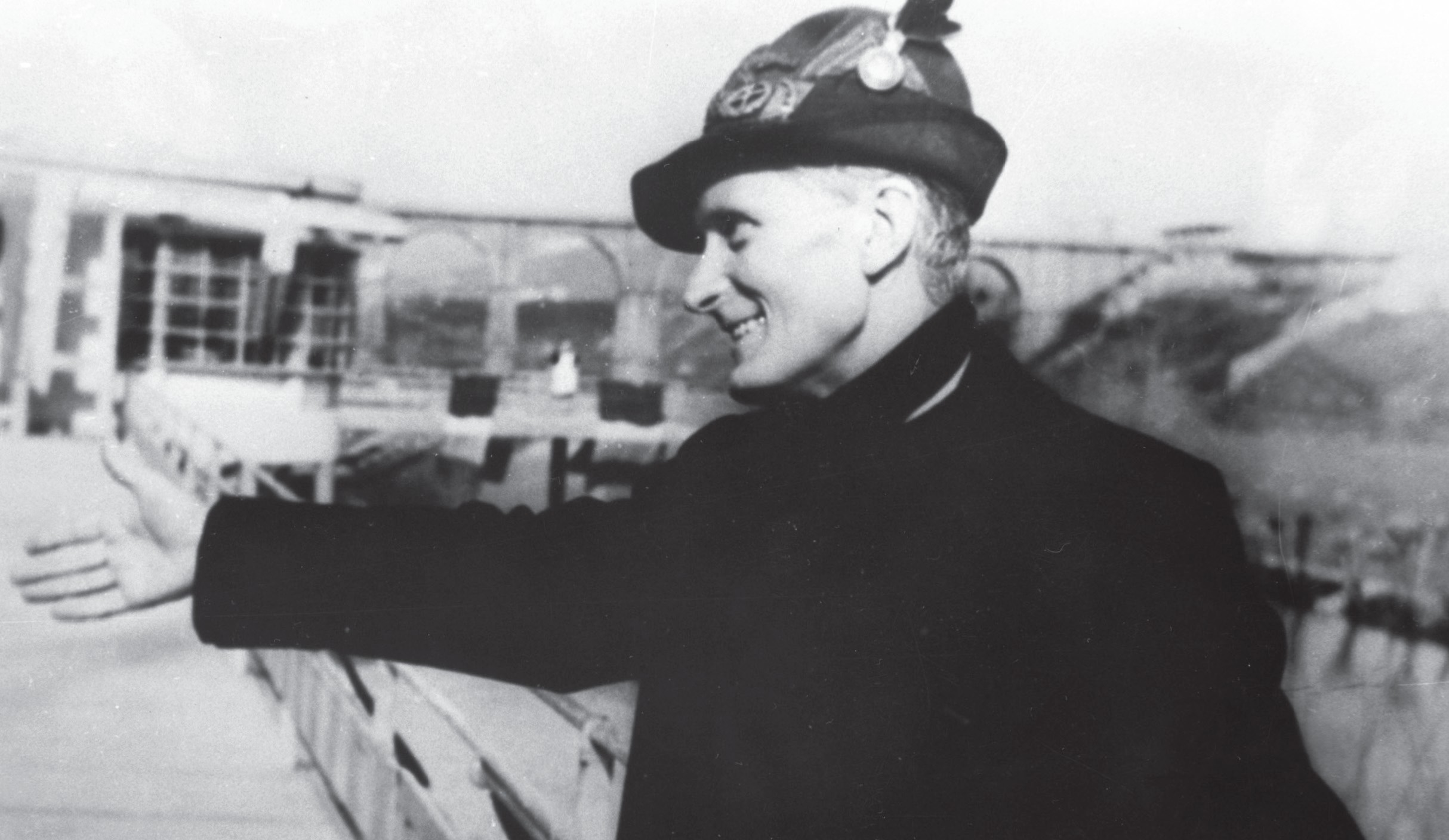
Don Carlo Gnocchi (1902–1956) was the chaplain of the Tridentina division in Russia.
Don Carlo Gnocchi was born at San Colombano al Lambro, in the Lodi plain, on 25 October 1902.
He was ordained a priest in 1925.
In 1940 he took part as a military chaplain in the Albanian campaign with the “Julia”.
Discharged, in 1942 he volunteered again as a chaplain, in Russia with the Alpini of the “Tridentina”, and earned a silver medal.
Having miraculously survived the tragedy of the retreat, he began a work of care and rehabilitation for the war-maimed and for polio sufferers which in 1952 was officially recognised as the “Fondazione Pro Juventute”.
His last prophetic gesture was to donate his corneas to two blind boys, at a time when organ transplants were not yet regulated by law in Italy; the gesture sped up the debate on transplants and a few weeks later a specific law was passed.
He was declared Venerable by Pope John Paul II in 2002 and beatified in Milan on 25 October 2009.
He died in Milan on 28 February 1956, leaving instructions for his corneas to be donated to two blind young people.
In his book «Cristo con gli alpini» he described the retreat as a collective feat in which it was hard to single out individual episodes: artillerymen defending their guns hand to hand, Alpini climbing onto tanks, frostbitten and wounded men dragging themselves along the tracks rather than fall into enemy hands, everyone from the last Alpino to the commanding general giving all they had. His conclusion is well known: “God was with them, but the men were worthy of God.”
Chaplain of the Julia and the Tridentina
In 1940 don Gnocchi left as a military chaplain for the Albanian campaign with the Julia division. Discharged, in 1942 he asked to return to the front: he volunteered for Russia with the Alpini of the Tridentina, and for that service he received the Silver Medal of Military Valour.
The chaplain of an Alpini unit was not a symbolic figure. He marched with the column, stayed with the wounded, buried the dead. In the retreat of January 1943 that meant crossing the steppe on foot with everyone else.
What he brought back from the retreat
The retreat from the Don in January 1943 is the event that splits his life in two. The overall picture of those weeks is in the section Alpini in the Second World War; how the Alpini appeared to those who fought them is told in Seen by the enemy.
In the veterans’ accounts one detail recurs that concerns the chaplain directly: collecting the last wishes and messages of the dying to take back to their families. It is from those charges, not from a plan drawn up at a desk, that his post-war work began.
From the “mutilatini” to the Foundation
After the war don Gnocchi cared for children maimed by the explosives left on the ground and for polio sufferers: the “mutilatini”. The work was officially recognised in 1952 as the Fondazione Pro Juventute, and from it grew the organisation that bears his name today and works in rehabilitation.
The move from the front to care work was not a conversion: it was the same activity carried on in another setting. In Russia he gathered the last words of the dying; in Italy he looked after those who had survived but were scarred.
1956 and recognition
Don Gnocchi died in Milan on 28 February 1956. His last gesture was to donate his corneas to two blind boys, in an Italy where organ transplants were not yet regulated: a decision that also had legal consequences. He was declared Venerable in 2002 and beatified in Milan on 25 October 2009.
Why the Alpini remember him
In the ANA sections and groups don Gnocchi is not remembered as a generic saint but as one of their own: a chaplain who went through Russia and who, once home, never stopped. That is why he appears among the figures of this site, alongside those who wore the Alpini hat.
Sources
- Fondazione Don Carlo Gnocchi
- Historical archive of the Associazione Nazionale Alpini
- Treccani
- Documents of the beatification cause


