From the trenches around Tre Cime to the streets of occupied Belluno: a journey through photographs, memories and Great War sites. With a stop on the hills of Barp, above Sedico, where research meets the final battles of November 1918.
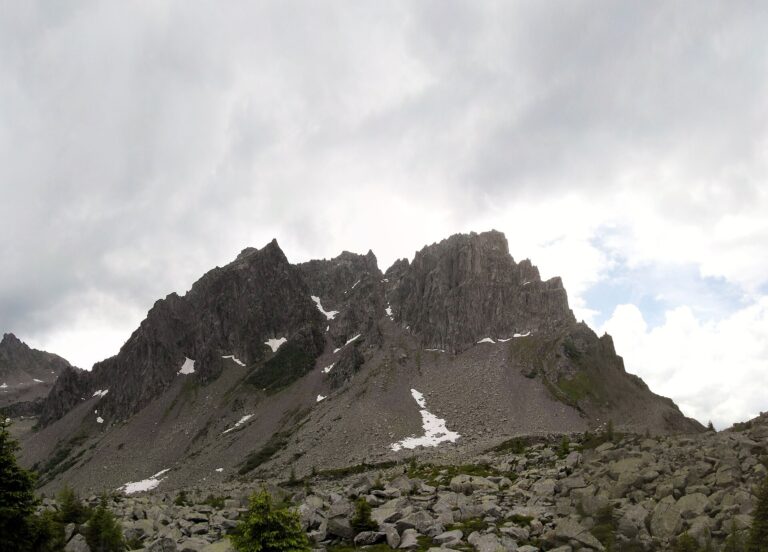
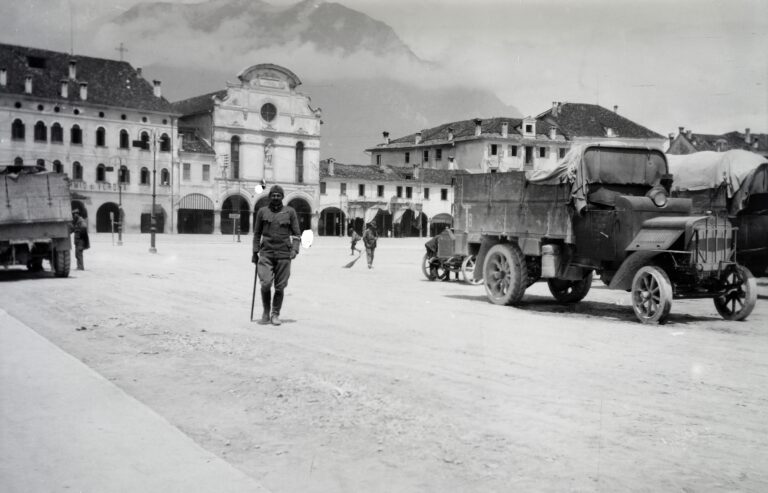
In Great War photographs, the Dolomites seem both familiar and very distant. Tre Cime retain their outline. Below the rock faces, however, stand huts, barbed wire and men wrapped in cloaks. Carts and columns of soldiers travel along valley roads. In Belluno, uniformed figures stand outside a theatre turned into an ammunition depot.
To recognise these landscapes, we need to look twice. First at the mountains, then at what war had built within them.

Traces of Austro-Hungarian troops run through places now visited by walkers and travellers: Monte Piana, Lagazuoi, Sasso di Stria, the roads of the Agordino and central Belluno. They also lead down to less familiar places such as Libano and Barp, in the municipality of Sedico. Here, history still holds unanswered questions: where did the soldiers sleep, which units held the positions, and what happened in the final days of the war?
What does K.u.k. mean?
The abbreviation k.u.k., often simply written KUK, stands for the German kaiserlich und königlich: “imperial and royal”. It identified the joint institutions of the Austro-Hungarian monarchy, including its Common Army.
Behind those initials was a world of different languages and origins. The army brought together men from the empire’s many regions: German speakers, Hungarians, Czechs, Poles, Slovenes, Croats and others. Calling them all “Austrians”, as local memory often does, obscures that diversity. The Austrian historical project Der Erste Weltkrieg examines the troops’ linguistic composition. Source: Die Welt der Habsburger.
German was the common language of command and service: every soldier had to know a standard set of orders, whatever his mother tongue. This coexistence of languages helps explain why the same war left accounts in German, Hungarian and many other languages. Source: Die Welt der Habsburger, the monarchy’s army.
Unit names also need care. IR means Infanterieregiment, infantry regiment; Baon abbreviates Bataillon, battalion. Identical numbers alone do not identify the same unit: the Italian 46th Regiment of the Reggio Brigade and the Austro-Hungarian 46th belonged to opposing armies.
The mountain front and the occupied valleys
Understanding the Austro-Hungarian presence in the Belluno Dolomites requires following two periods.
The first is the mountain front that opened in 1915: trenches, observation posts and tunnels at the heights separating the armies. The second begins in autumn 1917, after Caporetto and the Italian withdrawal: the geography of the war changes and Belluno experiences occupation.
These periods are not interchangeable. Some territories now included in the province of Belluno then belonged to the Habsburg monarchy. The presence of imperial soldiers in the mountains in 1915 therefore cannot all be described as occupation of Italian territory.
In the Agordino, the front crossed a long succession of mountains, from Marmolada to Lagazuoi, passing through Padon, Sief, Col di Lana and Sasso di Stria. Names now marking summits or destinations on walking maps then denoted sectors to hold, connect and supply. Source: the Agordino and the Great War.

The Rainer: from mountain photographs to village names
One source for following this presence is the history of the 59th Infantry Regiment “Erzherzog Rainer”, published by Maximilian von Hoen in 1931 and digitised by the Upper Austrian State Library.

The volume preserves photographs, maps and reconstructions of movements. Images collected for this research show the 10th Battalion in the Dolomites, skiers in winter 1915, and military quarters among rock and snow. They are valuable for details at the edges too: materials, access routes, shelters and small spaces carved out within difficult surroundings. The digitised Rainer volume.
Then, among the dates of the regimental calendar, names much closer to Belluno emerge.
On 21 January 1918, the calendar records the move of the regimental headquarters to Vezzano, the 1st Battalion to Libano and the 4th Battalion to Lasserai. Vezzano is the hamlet in the municipality of Belluno below Tisoi and Bolzano Bellunese: identifying the place correctly restores this military movement to its local geography. Source: Rainerregiment Gefechtskalender 1914–18.
The same calendar makes it possible to measure that stay as a whole. On 20 January the regimental staff and the 1st Battalion had marched to “Mean”, in all likelihood Meano, in the municipality of Santa Giustina, and the 3rd Battalion to Lasserai. As early as 4 February 1918 the regiment was marching to Cortina d’Ampezzo and the next day to San Candido (Innichen), from where it travelled by train to Lower Austria to be reorganised: the stays at Vezzano, Libano and Lasserai therefore lasted about two weeks. In June the Rainer returned to the front on the Asiago plateau, at Col del Rosso and Monte Melago; after the collapse at the end of October they were taken from Innsbruck to Salzburg, where the regiment was disbanded on 12 November 1918.
The entry documents a destination. It does not yet identify the houses used as quarters, the duration of each stay or the tasks assigned to individual men.
This is where research can meet local knowledge: a family photograph, a surviving inscription or testimony with names and dates might help identify a building. The unit’s presence at Libano, however, is not enough on its own to assign a particular Barp position to it.
Belluno: the year of hunger
Descending from the mountains, the photographs change.
The municipal historical archive dates the start of Belluno’s occupation to 10 November 1917. The town and its houses become a military rear area; for the inhabitants, a period of hardship begins. Source: Belluno Municipal Historical Archive.

The Austrian catalogue identifies the town theatre as an ammunition depot. Photographs of squares, bridges and streets show a town incorporated into the occupying army’s organisation.
For its inhabitants, the period remained l’an de la fan, the year of hunger. Belluno’s municipal historical archive preserves records and accounts of it, dating the end of occupation to the liberation of 1 November 1918. Source: Belluno at war, 1915–1918.
According to the same page, in the days immediately after the rout part of the town council and more than five thousand well-off citizens had left the city, as refugees in Pistoia and other parts of Italy. The climate towards the population became milder under the town commandant Karl von Kantz, in line with the new Emperor Charles’s wish to reach peace quickly, but living conditions continued to worsen. What the municipality documented for the Royal Commission of Inquiry into violations of the law of nations was collected in the volume Il Comune di Belluno durante l’occupazione austro-tedesca (“The Municipality of Belluno during the Austro-German occupation”), published in 1925 and now available as PDF files on the website of the Historical Archive, with chapters on food supply, requisitions, the cemetery and the notices issued by the town hall and by the Austro-Hungarian military administration.
The report of the municipal administration led by Luigi Mandruzzato describes pressure to reveal food stores and the difficulties of feeding the population. It brings the war into everyday needs: finding flour, distributing food and keeping a community functioning. Source: Mandruzzato administrative report, 1917–1918.
A nearly empty square photographed during occupation cannot convey those privations on its own. Understanding it also requires municipal records and inhabitants’ voices.
November 1918 along the Cordevole
In the final days of the war, the roads towards the Agordino filled once again with moving units.

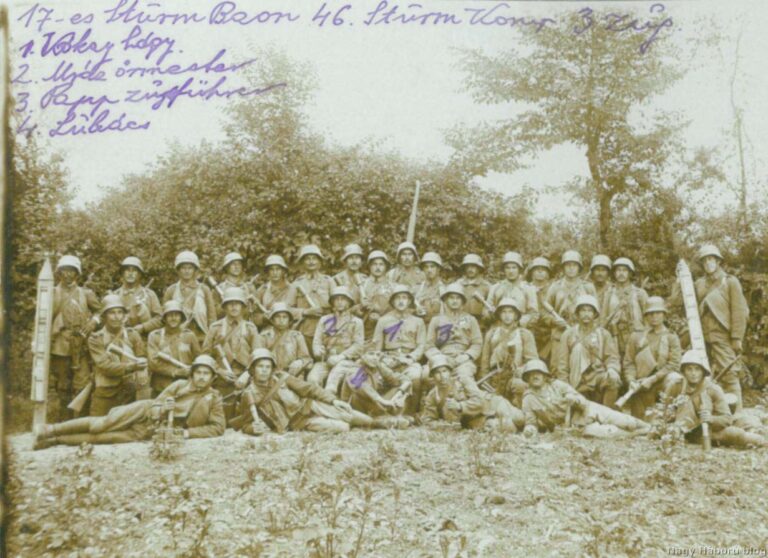
One testimony comes from the Hungarian officer László Kókay, whose memories are published by Nagy Háború. His account of 1 November 1918 follows the retreat through Dussano and Oregne towards the Mis bridge at Gron and the Peron area.
His pages describe uncertain orders, fear of pursuit and a night in the open. They also contain an episode of violence at Oregne: Kókay describes firing, with other soldiers, at young men he believed were signalling to the Italians.
This is a participant’s version. On its own, it does not identify the young man described as hit, establish his death or prove the purpose of the signals. The account therefore requires comparison with Italian documents and local testimony. Source: Kókay’s memories, part 46, published on 7 January 2019.
The episode is explored in the Gruppo Alpini Salce investigation Oregne, 1 November 1918: tracing the young man who was shot.
Barp and Le Coste: research above Sedico
A short distance away, on the hills above Sedico, research follows the positions at Barp and Le Coste.
The observations and local memory work of Gianni Viel have helped draw renewed attention to these places and the fighting of early November. Their location matters: between the Valbelluna and the entrance to the Cordevole valley, within the landscape crossed by the Italian advance and the Austro-Hungarian retreat.
The Gruppo Alpini Salce article The Reggio Brigade at Mas and Barp: the final battles above Sedico follows the story from the perspective of the Italian 45th and 46th Regiments, which formed the brigade.
Precisely identifying the Austro-Hungarian units at each position remains a task requiring documentary evidence. A unit’s presence nearby months earlier does not automatically establish who fought there in November 1918.
Dates also require care: a town’s liberation, a local surrender and the general cessation of hostilities are distinct events. The Villa Giusti armistice was signed on 3 November 1918 and took effect at 3 p.m. on 4 November. Source: Italian Army, military history account.
Where to encounter this history today
The journey can begin in central Belluno and continue to museums and mountain routes. These are different experiences: an urban walk, a museum visit and a route through tunnels and trenches require different preparation.
| Place | What to look for | Visitor information |
|---|---|---|
| Belluno | The theatre, squares and places recognisable in occupation photographs | Municipal Historical Archive |
| Forte Tre Sassi, Valparola | The fort and museum devoted to war in the Dolomites | Great War Museum |
| Sasso di Stria | Trenches and works of the Austro-Hungarian defensive line | Museum’s historical route |
| Lagazuoi | Tunnels, positions and open-air museum routes on the sites of both armies | Lagazuoi open-air museum |
| Monte Piana | Trenches, communication trenches and open-air historical museum | Belluno Dolomites visitor information |
For mountain routes, check current conditions, snow cover and operators’ advice. Tunnels and protected sections require equipment suited to the itinerary.
Barp and Le Coste should instead be approached as sites of local research: before suggesting a walk to the positions, access, ownership and the condition of the structures must be checked. The reference point is local historical research, rather than an established museum trail.
Reading the landscape with a map and a photograph
Following Austro-Hungarian traces in the Dolomites means constantly moving between scales.
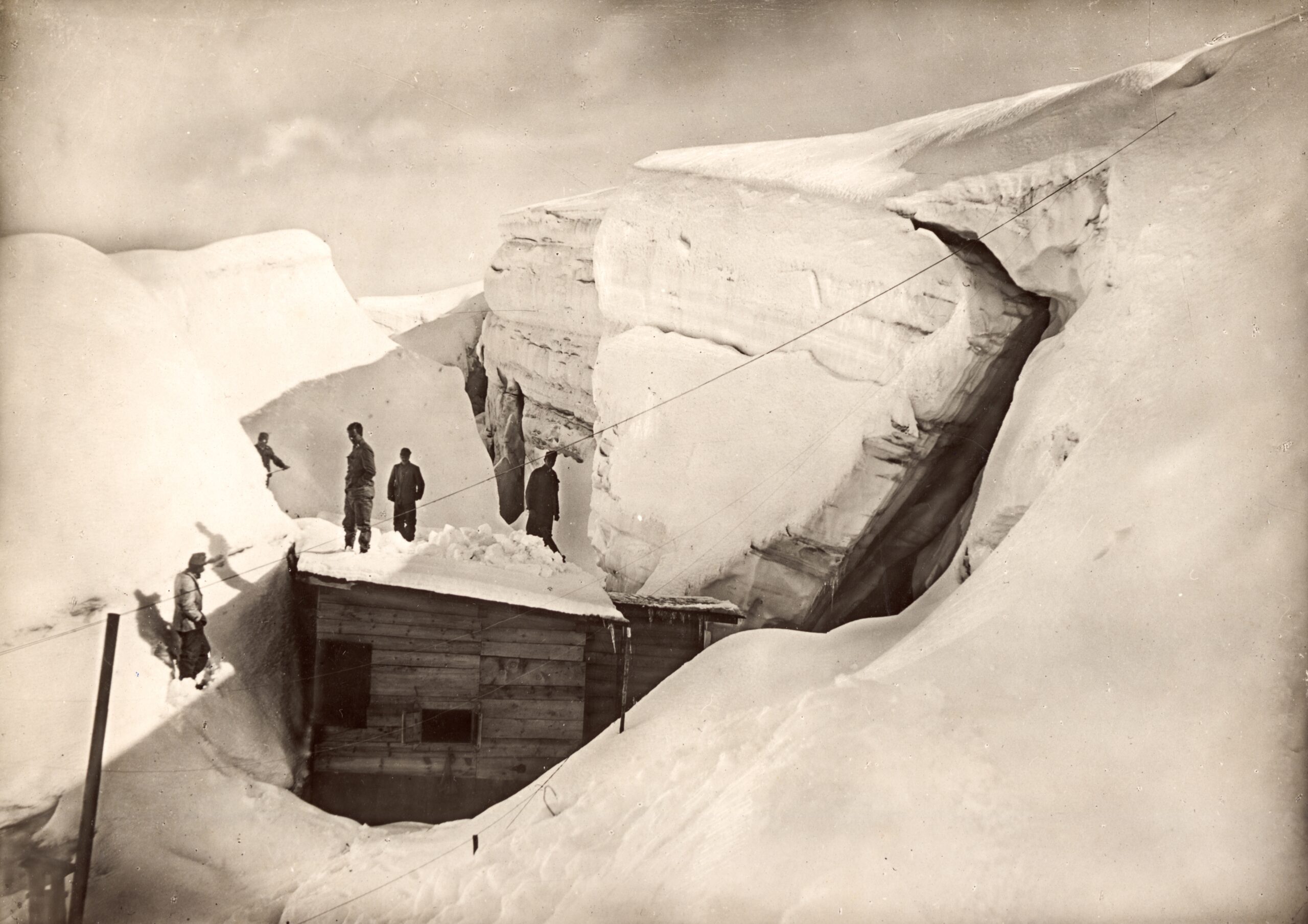
A map shows a regiment’s movement. A calendar names Libano. A photograph preserves a hut below a rock face. A municipal report describes the search for bread. An officer’s memories return us to a road at Oregne, leaving questions that still concern a family and a community.
The landscape holds these stories together. Reading them requires attention to names, comparison of images and a distinction between what is documented and what remains to be found.
It is a way of travelling through the Dolomites that often begins with a mountain and ends outside a house.
Photographic sources: Images of the Rainer and the Edelweiss Battalion: Maximilian von Hoen, Rainer regimental history, 1931, digitised by the Oberösterreichische Landesbibliothek. Cover: Fortepan / Barják András.
Cover photograph: Austrian position on Marmolada in winter 1916. Fortepan / Barják András.
The Great War in the Belluno area: further reading
These articles connect military units, personal testimony and the history of places.