

Lest we forget
Ponte di Perati: the true story behind the Alpini song
It is sung at every adunata (the Alpini gathering), almost always with a lump in the throat.
But what is documented behind the verses of “Sul ponte di Perati”(“On the Bridge of Perati”), and what belongs instead to the legend that the Alpini have handed down for more than eighty years?
Anyone who types “Ponte di Perati true story” into a search engine is asking a precise question: does that song we all know, sung softly at the Adunata Nazionale (National Gathering) and at Alpini commemorations, really tell of something that happened, or is it — like so many war ballads — a myth built up over time?
The most accurate answer is: both.
There is a true, documented story, made up of men, miles of marching, cold, mud and very heavy losses.
And there is a song that tells that story in its own way, with the liberties that folk poetry has always taken.
Where the song really comes from
The first thing that surprises anyone who studies the origins of “Sul ponte di Perati” is that the song did not appear out of nowhere in the autumn of 1940.
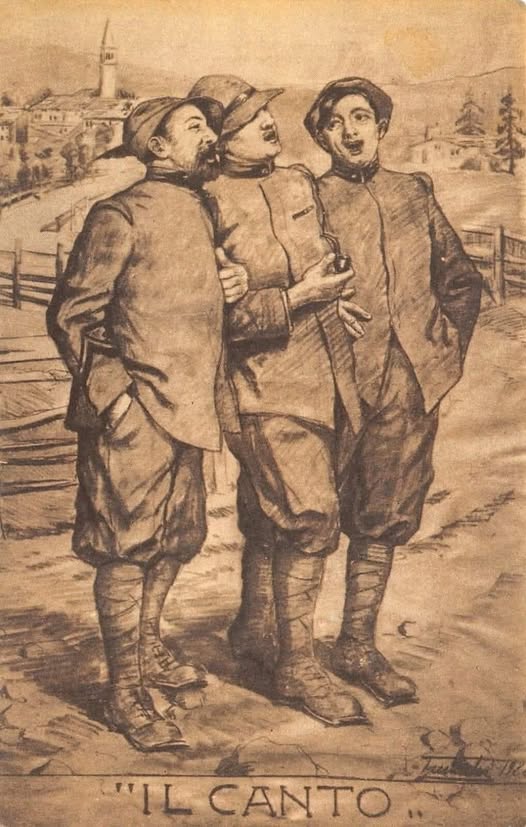
The melody and the structure of the verses in fact draw on an older Alpini song, “Sul ponte di Bassano”(“On the Bridge of Bassano”), already known before the Second World War and linked to the tradition of the Great War.
The Alpini of the Julia took that model — a bridge as the image of the point of no return, the farewell to a loved one, the comrades who do not come back — and adapted it to their own experience of the Greek-Albanian campaign.
Then there is a second, less well-known detail that further complicates the idea of a simply patriotic song.
Some of the verses circulating among the soldiers took a far harsher tone towards the war and those who had decided on it.
“Quelli che l’han voluta non son partiti,
quelli che son partiti non son tornati.”
(Those who wanted it did not go; those who went did not come back.)
A verse like this turned the song from a simple lament for the dead into an explicit criticism of the war.
It is hardly surprising, then, that “Sul ponte di Perati” was considered defeatist and banned under the Fascist regime.
What really happened in the autumn of 1940
Here the history — the real one — is anything but legend.
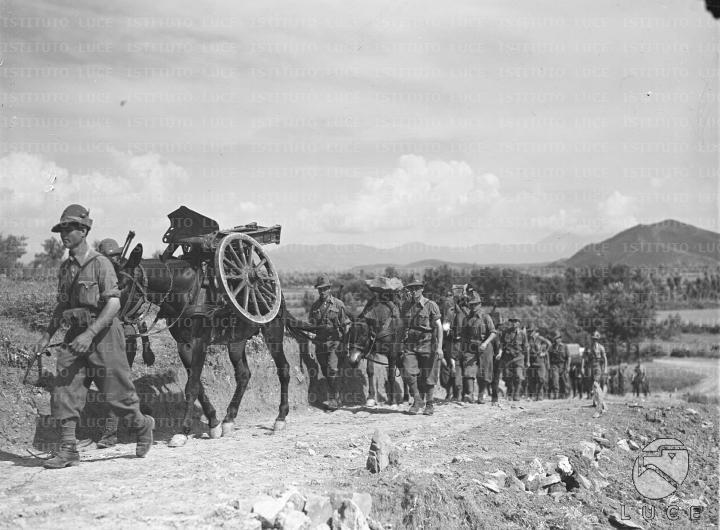
On 28 October 1940 Italian troops invaded Greece from Albania.
The “Julia” Alpine Division — with the 8th and 9th Alpini Regiments and units that included battalions whose names have gone down in history, such as Tolmezzo, Gemona, Cividale, Vicenza and L’Aquila — advanced into the mountainous Pindus region.
The task assigned to the division was extremely ambitious: to push through the mountains and help separate the Greek forces in Epirus from those deployed further north.
It went far worse than expected. Greek resistance proved much stronger than the Italian commanders had imagined.
The Julia had to fight in extremely harsh conditions, on high mountains, in the rain and then in the snow, with communications and supplies growing ever more difficult.
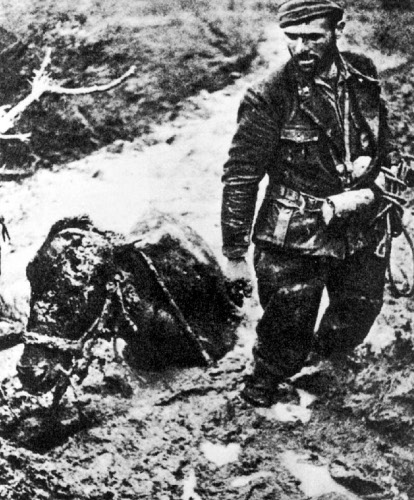
The weeks that followed were a succession of battles, exhausting marches and withdrawals.
For many men of the Julia the name Perati would become the symbol of that moment: the gateway through which the retreat towards Albania passed.
Four days around the bridge
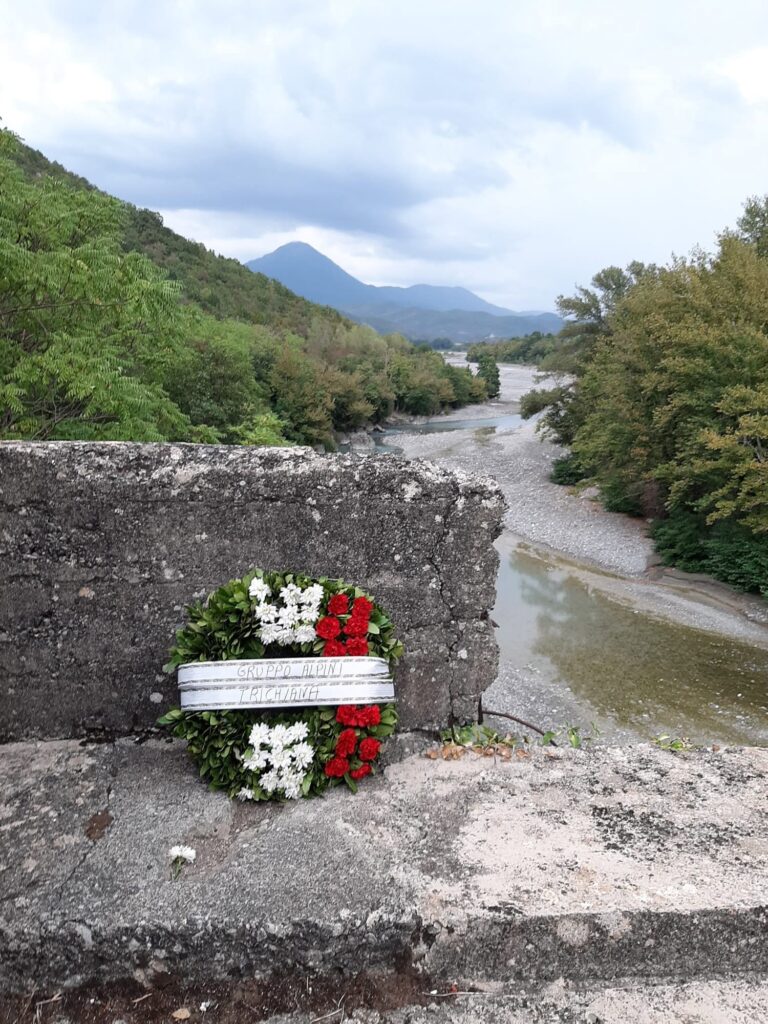
With the Greek counter-attack, the bridge truly became a decisive point.
According to the historical reconstruction published by the Associazione Nazionale Alpini, by 18 November 1940 the Italian defence was concentrated on the Perati bridge itself, which had become the only way through for the withdrawal.
There followed four days of fighting.
On 22 November the Julia finally received the order to withdraw, blowing up the bridge to slow the Greek advance.
The return towards Perati
The war, of course, did not end with the withdrawal of November 1940.
For months Italians and Greeks went on fighting in the mountains of Albania and Epirus, in extremely harsh conditions.
Only in the spring of 1941, after German military intervention in the Balkans and the collapse of the Greek front, were Italian troops able to advance once more towards the positions abandoned months earlier.
It is in this context that the last verse takes on its meaning, the one that turns the initial mourning into an image of return:
“Alpini della Julia in alto i cuori…” (Alpini of the Julia, lift up your hearts…)
In Alpini memory, the tricolour on the bridge thus becomes the symbolic conclusion of a story that began in mud and retreat.
So, is it a true story?
Yes and no.
And that is exactly what makes it a story worth telling even today.
The Julia is real, as are its men, the Pindus, the Greek campaign, the Sarandaporos, the Vojussa, the bridge, the fighting of November 1940, the withdrawal and the destruction of the bridge.
Above all, the suffering of thousands of soldiers sent to fight a war begun with gravely inadequate preparation is real.
The song itself, on the other hand, is not a journalistic account of the facts.
It is a song built on an earlier model, altered by the soldiers and handed down orally, able to compress weeks and months of war into a few images:
a bridge, a black flag, a river,
a farewell and the memory of the comrades left behind in the mountains.
This is exactly what folk song has always done:
it does not tell history like a military bulletin, but condenses it into a symbol that can be remembered, sung and passed down from one generation to the next.
Michele Sacchet
Cover photo: Alpini and mules watering on the Vojussa, near the Ponte di Perati.
Sources and further reading
- Associazione Nazionale Alpini,
Gli Alpini nella storia d’Italia – Campagna di Grecia (The Alpini in Italian History – The Greek Campaign) - Associazione Nazionale Alpini,
Commissione per la difesa del canto alpino – Canti degli Alpini (Commission for the Protection of Alpini Song – Alpini Songs) - Associazione Nazionale Alpini,
Scritti… con la divisa (Writings… in uniform) - Coro Marmolada,
Vi racconto un canto: Sul ponte di Perati (Let me tell you about a song: Sul ponte di Perati) - Alceste Mainardis,
Sul ponte di Perati bandiera nera


