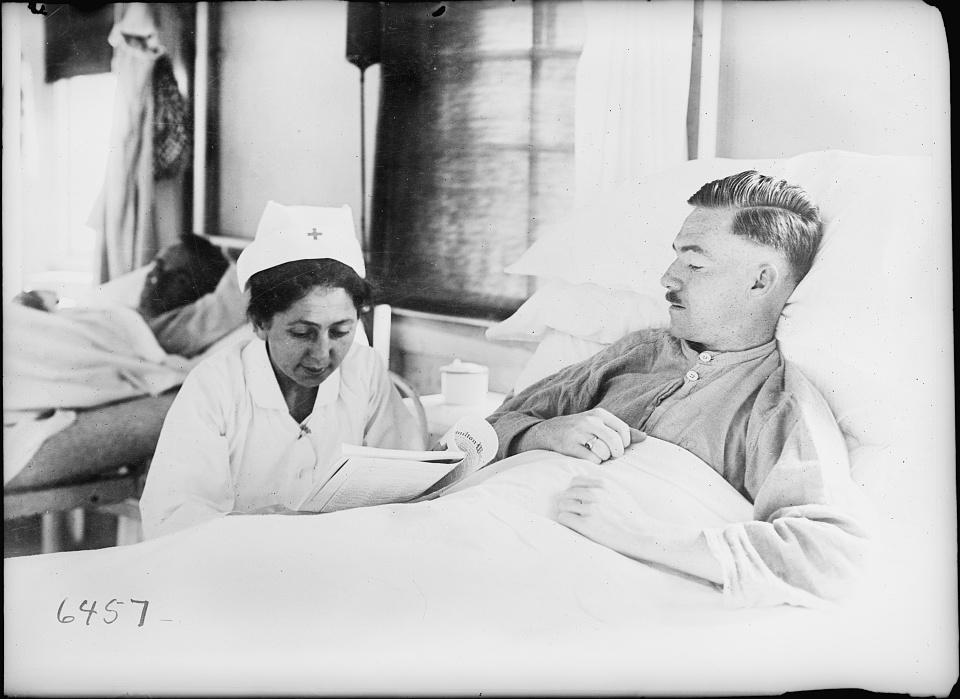
A familiar photograph appears in family albums from a century ago: a nurse in a white apron, a small red cross on her chest, standing at the entrance to a field hospital or beside a stretcher on a train bound for somewhere else.
These are the Crocerossine, the Italian Red Cross nurses. Their story — one of quiet courage more than medals — deserves to be told, especially as several of the “sisters” among our friends still wear that uniform today.
The beginnings: training and first relief efforts
The official foundation of the Italian Red Cross Volunteer Nursing Corps is dated to 9 February 1908, when a school opened at the Celio Military Hospital in Rome under the patronage of Queen Elena. The Col Maòr article recalls around 250 students. Yet the story began a little earlier: during the 1906–1907 academic year, Sita Meyer Camperio organised the first courses in Milan, soon followed by other cities.
In 1908, the new nurses faced their first great test, not in war but in the immense tragedy of the Messina earthquake, providing organised assistance to the affected population. From then on, the Red Cross nurse became one of the best-known faces of Italian women’s involvement in wartime: first in the Italo-Turkish War of 1911–1912 and the Balkan War that began in 1912, then on a much larger scale in the First World War, which brought the first mass mobilisation of the volunteer nurses.
Women quietly moving a boundary
The idea that women “of civilian status”, as they were described at the time, should care for soldiers outside their own families was not welcomed everywhere. Young women moving with unprecedented independence among men in uniform attracted severe criticism. Beneath the official praise for the nurses’ devotion lay a deeper unease: war had always been seen as men’s business. Without fanfare, the nurses were shifting that boundary.
The numbers convey the scale. On the eve of Italy’s entry into the war, there were around 4,000 Italian Red Cross volunteer nurses; the figure soon rose to about 8,000. Including members of other organisations, such as the Scuola Samaritana, brought the total to around 10,000 women mobilised.
At first, the white apron was worn mainly by daughters of aristocratic families; as mobilisation expanded, women from the middle classes joined them. They came from across Italy, varied in age and had different reasons for stepping forward: patriotism, the wish to take part in a decisive moment in national history, an almost religious impulse to help those who suffered, and a desire for personal and collective emancipation. None could simply leave on her own initiative, however: permission from a father, brother or husband was required.
A network of hospitals, trains and people
Even before war was declared, institutions, associations and private citizens offered buildings and property for hospitals. Factories, schools, villas and convents changed their purpose within weeks. In Bologna, for example, the “E. De Amicis” school and other primary schools, the Minghetti secondary school, the seminary, the Gozzadini children’s hospital and the Rizzoli became military medical facilities.
Across Italy, the Red Cross came to operate more than 200 territorial hospitals and up to 22 hospital trains. Special agreements allowed the nurses to work in both Red Cross and military facilities. Their status was placed on a level equivalent to that of officers, although they received no pay.
Their work went beyond dressing wounds. They wrote letters for those who could not, read aloud, offered comfort and stayed beside patients who would not survive. They were particularly involved in operating theatres and postoperative care.
Work patterns, duties and risks differed greatly according to location: at the front, behind the lines or aboard hospital trains. Nor were the nurses alone: the Red Cross also mobilised doctors, chaplains, administrative staff, cooks and drivers.
From 1915, Duchess Elena d’Aosta led this army in white aprons as Inspector General. Known as “the Generalissima”, she gave the Corps a rigorous organisation, developing what many still regarded as charitable work into a fully professional service.
The cost of caring
Not all the nurses returned home. Dozens lost their lives during the conflict; many others were wounded or taken prisoner. Margherita Kaiser Parodi is buried at the Redipuglia Military Memorial. The Italian Red Cross remembers her as the only woman among the memorial’s one hundred thousand soldiers. Her name also makes visible the sacrifice of those who cared for the wounded.
A thread that reaches us today
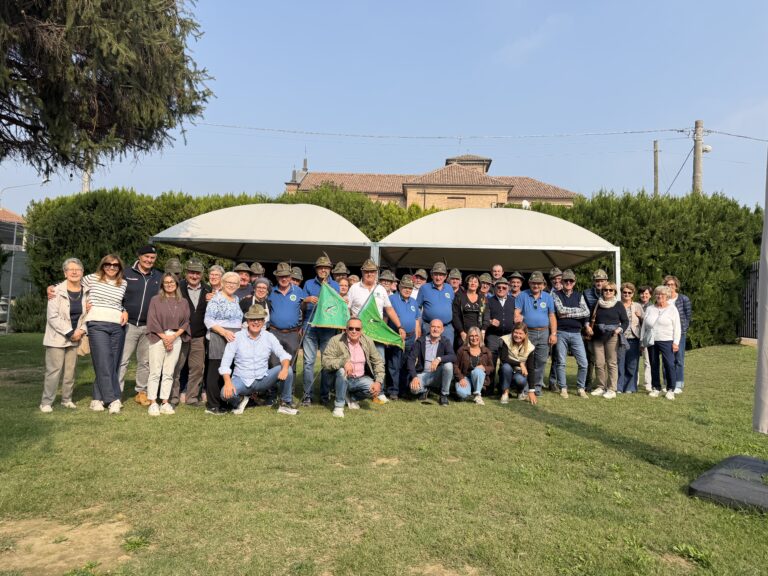
More than a century has passed since the courses in Rome held under Queen Elena’s patronage, but the thread linking those first 250 students to today’s Red Cross nurses has never been broken. Among the friends of our Alpini Group are women who carry on the same tradition, with the discretion and dedication of their “elder sisters” a century ago. To them, and to the memory of those who came before them, we offer our heartfelt thanks.
Sources and further reading
- Michele Sacchet, Le Crocerossine nella Grande Guerra, Col Maòr, year LXIII, no. 3, October 2026, p. 8. Revised from the version supplied by the editorial team.
- Italian Red Cross: history of the Volunteer Nursing Corps and National Inspectors, accessed 31 October 2026.
- Arianna Ceschin, Essere crocerossina nella prima Guerra mondiale: la vicenda delle sorelle Astuto nel volume di Alessandro Gradenigo, Qdpnews.it, 27 September 2023.