In November 1918 the road to the Agordino led through defences that were still active. Military accounts and the memory of Barp help reconstruct the fighting before the end of the war.
My research began with an account of an Austro-Hungarian position on Le Coste hill, above Barp di Sedico.
A trace in the ground, the testimony of someone who lives there, and a question: which soldiers fought here when the Great War was drawing to a close? Following that question brought me to the Reggio Brigade, the routes through Belluno and the Austro-Hungarian defence of the entrance to the Cordevole valley.
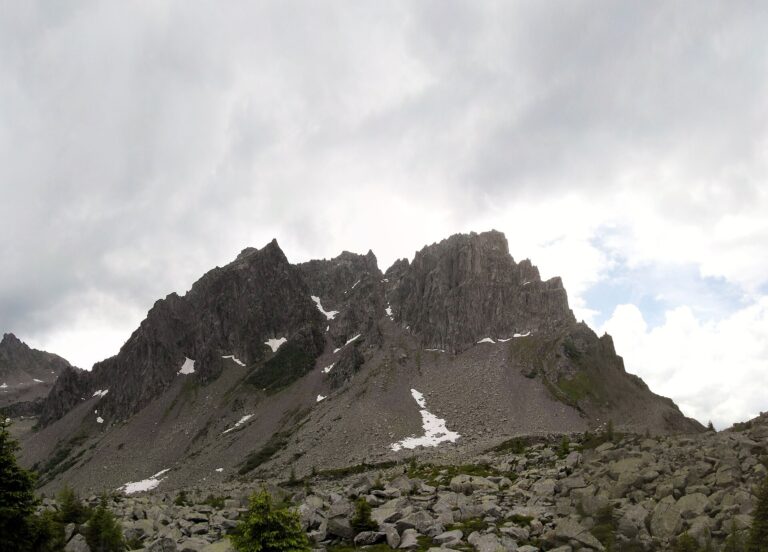
Le Coste: where memory meets the landscape
In a Facebook post, Gianni Viel drew attention to these works, the trenches and memories passed down in his family. In an interview by Luigi Guglielmi for L’Amico del Popolo, he had taken viewers around the sites, describing his work to make their traces visible again.
His testimony brings military history into the everyday landscape of fields, houses and family land crossed by war. This valuable local memory deserves to be heard and compared with documents, keeping recollections, interpretations of surviving structures and written military orders distinct.
For the Reggio Brigade, made up of the 45th and 46th Infantry Regiments, the Belluno area already meant war and retreat.
Before Barp: two and a half years in the Dolomites
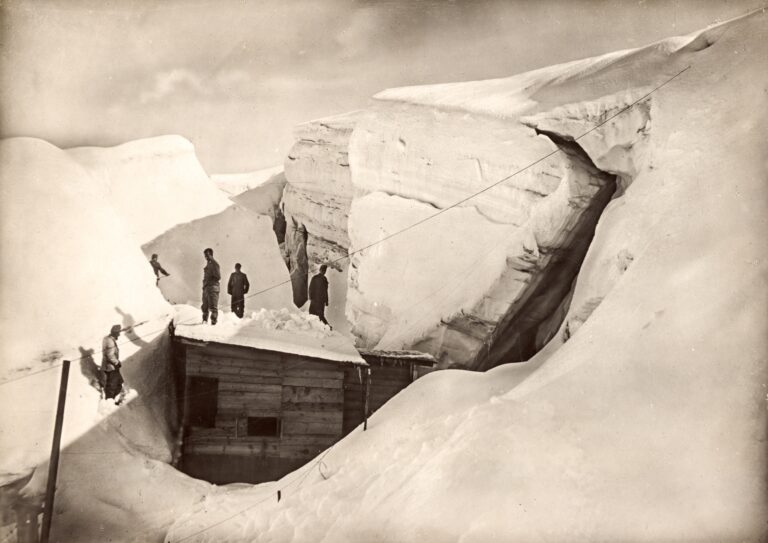
That war had begun much higher up. When hostilities broke out in May 1915, the brigade was deployed in Cadore between Perarolo and Tai; in early June it moved up the Val Costeana to the Falzarego Pass. On 11 July units of the 45th, together with the Alpini of the Belluno battalion, among them Angelo Schiocchet, took the Col di Bois; on 18 September elements of the 46th, with a company of Alpini volunteers, reached the summit of Tofana I.
From the spring of 1916 the centre of its war became the Col di Lana and Monte Sief, while its rest areas lay around Caprile, in the Cordevole valley. Between 15 and 21 May 1916 the regiments assaulted the “Dente del Sief”: Lieutenant Ignazio Salaris and Second Lieutenant Francesco Fadda fell there. On 20 September 1917, on Cima Sief, Captain Riccardo Baiardi was killed. All three were awarded the Gold Medal of Military Valour. The account also mentions the Lagazuoi, the Sasso di Stria and the Valparola: places now visited as open-air museums, which reappear, seen from the other side of the front, in the article on the Austro-Hungarian troops.
The retreat of November 1917 also began here. The account notes a halt between Alleghe and Caprile on 3, 4 and 5 November, before the descent towards the Piave. For the 46th the price was very high: in the table of losses, under the entry running from the Isonzo to the Piave and the Grappa, the regiment records 52 officers and 1,600 other ranks missing, a figure to be read alongside the fate of the two battalions surrounded at Vignole.
So when, in November 1918, the 45th entered Agordo and the 46th Cencenighe, the brigade was not arriving in unfamiliar valleys: it was only a few kilometres from Caprile and the Col di Lana, where it had fought for two and a half years. The colours of both regiments would be decorated, in 1920 and 1922, with the Bronze Medal of Military Valour, with a citation that opens on “the impervious peaks of the Dolomites”. Historical account of the Reggio Brigade, 1915–1917, tables of losses and awards (in Italian).
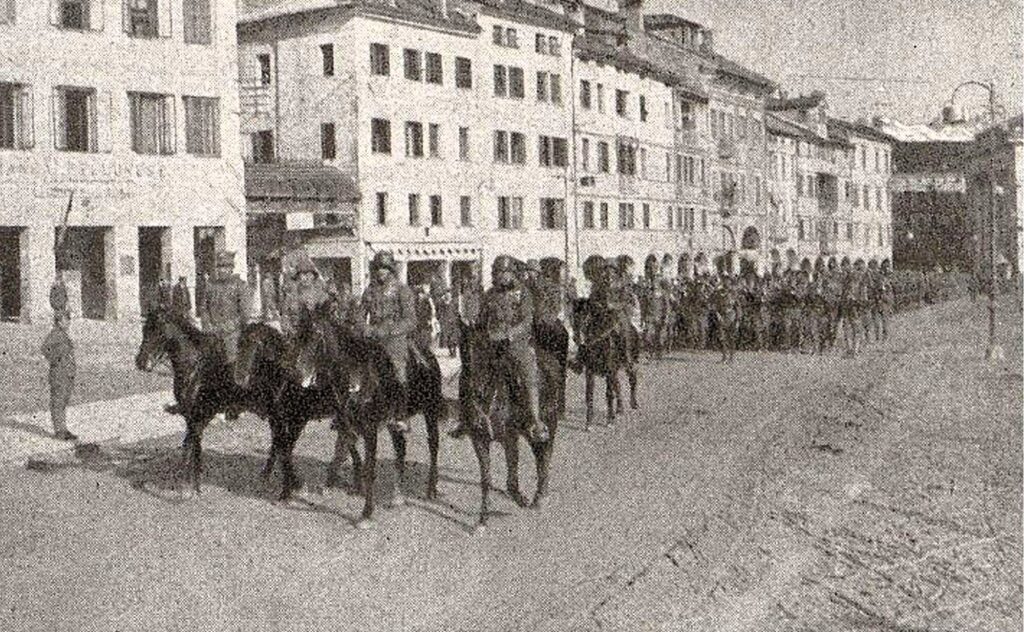
In November 1917, the 1st and 3rd Battalions of the 46th, retreating from Cadore, had been overwhelmed at Vignole, at the mouth of the Cordevole valley. A year later, the brigade returned to the same area on the advance. Historical account of the Reggio Brigade, 1917–1918.
The Reggio returns to the Belluno area
On 2 November 1918, the 1st Battalion of the 46th, acting as the advance guard, was halted south of Mas. To outflank the defence, two battalions of the 46th and one of the 45th were sent through Belluno, with orders to cross the Piave and attack from the rear.
The brigade’s account dates the overcoming of this resistance and the renewed advance into the Cordevole valley to 3 November. It then records the fighting by II/46 at Piano di Noac against the 2nd Bosnian-Herzegovinian Regiment, much of which was captured. On 4 November the 45th entered Agordo and the 46th Cencenighe. Reggio Brigade account, 1918.
Belluno therefore features in this story as a passage in an outflanking manoeuvre.
The Italian account explains its purpose; Viel’s reconstruction offers a closer reading of the terrain, describing an approach from the east and referring to the Gresal. The precise routes taken by individual units to the positions above Barp still need to be checked against orders and operational maps.
On the other side of the defensive line
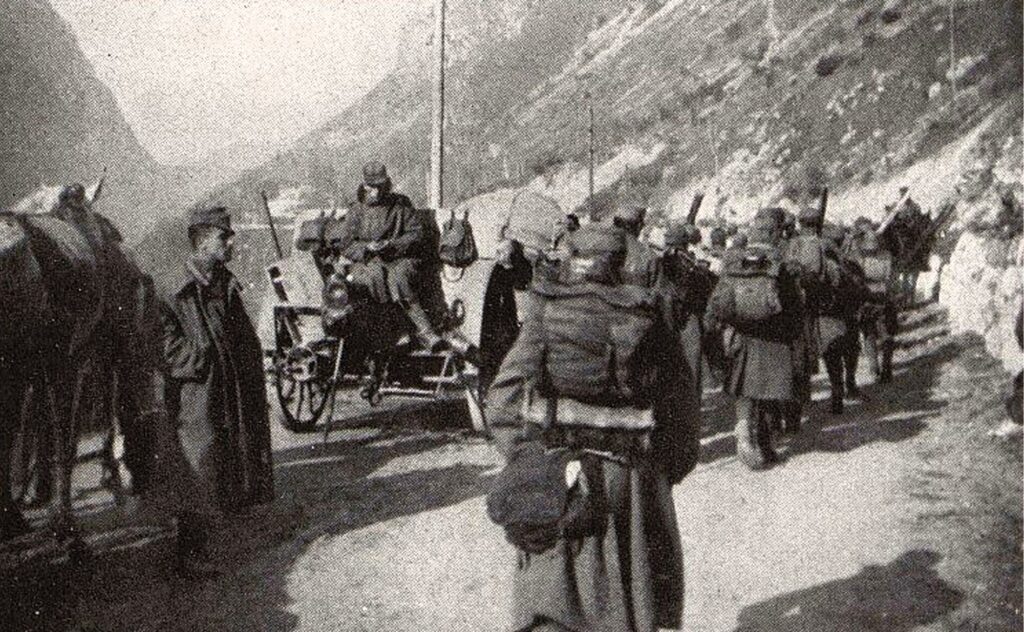
The Austrian official history offers a view from the other side. On 1 November it records a blocking position between Monte Sperone and Tisoi, in front of Peron, held by the 110th Brigade of the 55th Division, the 41st Schützen Brigade and Assault Battalions 13 and 50.
The following day it assigns the 55th Division the task of holding the approaches south of Peron until the afternoon, before withdrawing towards Agordo. This is the military framework within which to search for the defenders of the works above Sedico. Österreich-Ungarns letzter Krieg, VII, p. 696; p. 697.
The two accounts operate at different scales: the Reggio Brigade’s follows the Italian advance, while the Austrian account describes the defensive line and the withdrawal of larger formations. Comparing them does not yet establish when each position fell, nor justify treating the entire local defence as a single unit that remained in place for three days.
The Hungarian lieutenant’s diary
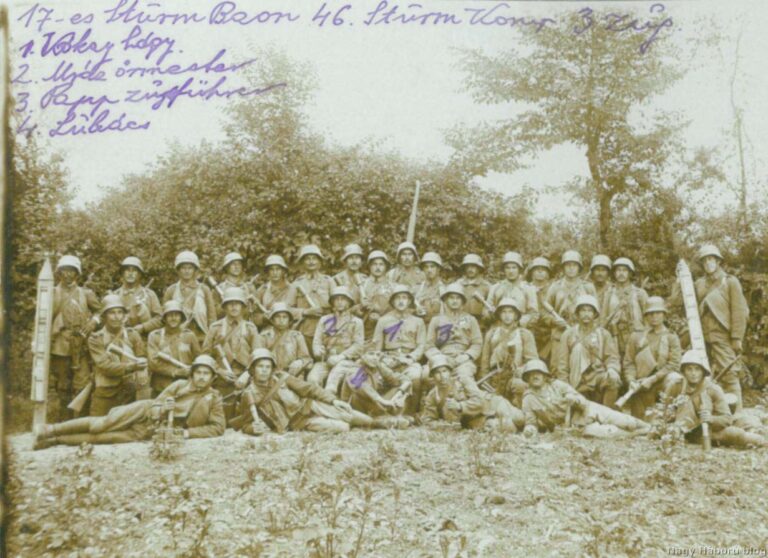
An individual voice comes from the memories of the Hungarian officer László Kókay, published in transcription by A Nagy Háború. On the evening of 1 November he describes passing through Mas, rejoining Assault Battalion 17 and camping in the open in front of Peron.
He recalls artillery still firing and a freezing night among many retreating troops. This is an Austro-Hungarian soldier’s testimony in Hungarian; it does not identify the men serving the Le Coste positions. His unit came from the Austro-Hungarian 46th, distinct from the Italian 46th of the Reggio Brigade. Kókay’s diary, part 46.
In the same account Kókay, having crossed the Gron bridge in the dark, saw units halted along the road to Mas, mostly Bosnians, lighting fires with no concern for the Italians. He also notes, as something he learned later, that the Italians had entered Belluno at noon on 1 November and that small units had crossed the Piave east of Bribano. This is second-hand information and does not mention the Reggio; the presence of Bosnian troops on the road to Mas should nevertheless be read alongside the fight at Noac against the 2nd Bosnian-Herzegovinian Regiment recorded in the brigade’s account.
On 2 November, moving up the Cordevole towards Agordo, Kókay again notes a Bosnian regiment that had been marching alongside his battalion since morning without a halt; here too the diary does not give its number.
But who held the individual position at Le Coste? The documents read so far identify the general deployment, not the battalion or machine-gun section at that particular point. The I Corps diary and operational records for November 1918 have been located in the Vienna Kriegsarchiv catalogue: their descriptions are online, but no publicly available digital copies of the documents have been found. I. Korps 11, diary; I. Korps 92, operational records.
This uncertainty does not diminish the significance of these places. The works identified by Viel bring together landscape, family memory and historical research. Photographing and locating them, and comparing them with maps, can help establish the layout of the defences and frame more precise questions for the documents.
The fighting at Mas belongs to the final days of the war on the Italian front. The Villa Giusti armistice took effect at 3 p.m. on 4 November: the renewed local advance must be placed within that wider chronology. Turin State Archives, report on the Vittorio Veneto offensive.
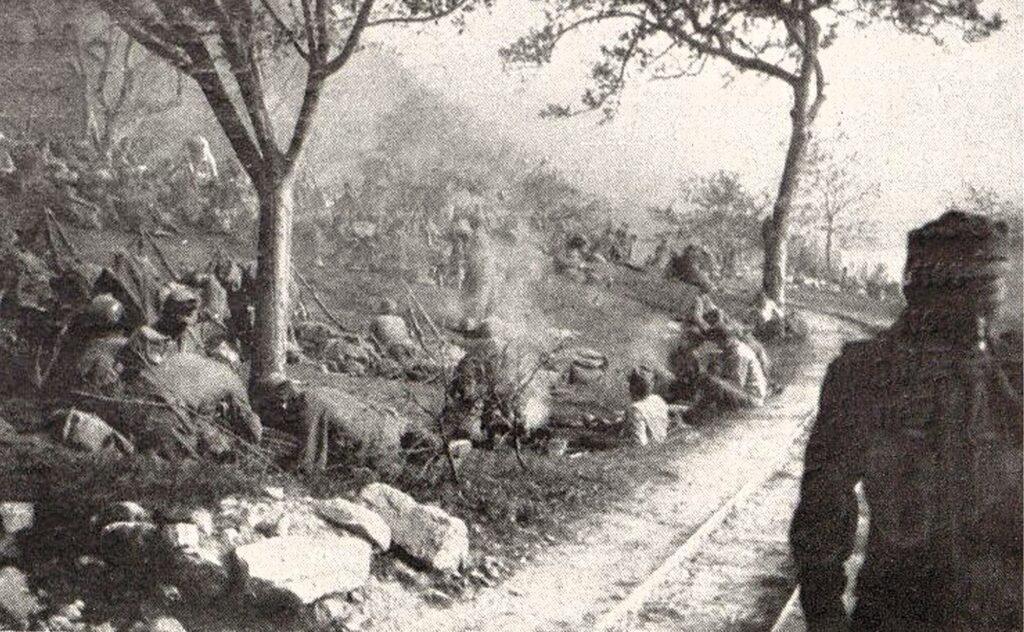
From Barp the view can now widen to the Dolomites. Regimental histories preserve photographs of columns in Belluno, halts in the Cordevole valley, camps and mountain positions. At Oregne, a Hungarian officer’s diary raises a question about a young civilian’s fate, explored in Oregne, 1 November 1918: tracing the young man who was shot.
The journey continues in Austro-Hungarian troops in the Belluno Dolomites: tracing an empire: photographs and documents help us follow the men, recognise the landscapes and give images their proper place and time.
The original question remains among the works at Le Coste: who was here in those final days?
Answering it with evidence means restoring the men who occupied these stones to memory, more than a century later.
The Great War in the Belluno area: further reading
These articles connect military units, personal testimony and the history of places.
Credits: Local memory: Gianni Viel. Interview, filming and editing of the video: Luigi Guglielmi, L’Amico del Popolo. The Reggio account was consulted in the linked online transcription; it is not the original daily regimental war diary. The Kriegsarchiv catalogue entries are cited as research tools, not as documents already examined.
Cover photograph: The Reggio Brigade’s 45th Infantry Regiment, reproduced from Nicola Oliva’s I Sardi della Brigata Reggio – Storia del 46° Reggimento Fanteria nella guerra del 1915–1918.