On 23 February 2026 Italians and Hungarians came together at the Ghertele in Roana to unveil a monument to a great scientist who fell in the Great War. A story of duty, science and memory that crosses borders.

On 23 February 2026, on the Asiago plateau, something fine and rare happened: Hungarians and Italians came together, on the same mountains where a century ago they stood on opposite sides of the front, to unveil a monument to a man history had almost forgotten.
His name was Győző Zemplén. He was a physicist, a university professor, a husband and the father of five children. He was also an officer of the Austro-Hungarian army, and here — on these plateaus we know so well — he met his death on 29 June 1916, struck by shrapnel while observing enemy positions from his command post.
It all started with historical research. Dr Vittorio Poli, a member of the Museo Siben Alte Komoine — an Asiago association devoted to the memory of the Great War — had identified the exact spot where Zemplén fell. That was in 2020. He realised the place deserved a tangible sign and launched an initiative that would take years of joint work between Italian and Hungarian institutions, museums, associations and local communities.
The unveiling was attended by Tamás Sulyok, President of the Republic of Hungary, the mayor of Roana Luigi Martello, and Gábor Zemplén, great-grandson of the physicist and International Vice-Rector of ELTE University in Budapest. A sober, dignified, moving ceremony.
An extraordinary man in an extraordinary age
Born in 1879 in Nagykanizsa, Győző Zemplén grew up in Fiume — then the cosmopolitan port of the Empire — where he learned to speak fluent Italian, German and French. His university friends affectionately nicknamed him “il Taliano”: that Adriatic city had shaped him as much as his science.
In 1896 he entered the prestigious Báró Eötvös József Collegium in Budapest, the forge of the Hungarian intellectual elite. Its director, Géza Bartoniek, remembered him like this:
Géza Bartoniek, director of the Eötvös Collegium · posthumous recollection
“He had fiery eyes, an open gaze, lively movements. He spoke quickly but very clearly. What set him apart was absolute sincerity and good faith. His talent was evident — and he knew it — but he never flaunted it.
Constant work was his answer to the gift he had received. His lively character led him to break off work for the pleasure of company, but he never went to bed before he had honestly completed the day’s task.”
— Géza Bartoniek, Szövetségi évkönyv, 1924
He became one of the closest pupils of Loránd Eötvös, the great Hungarian physicist. His research focused on the theory of gases and the physics of shock waves: Zemplén’s theorem on shock waves still bears his name in theoretical physics textbooks.
In 1906 he translated into Hungarian the fundamental work of Marie Curie on radioactive substances. In 1908 he was elected a corresponding member of the Hungarian Academy of Sciences. From 1912 he was a full professor at the Budapest Polytechnic, where he taught mechanics, thermodynamics, relativity and radioactivity.
In February 1902 the Vasárnapi Ujság described his graduation sub auspiciis regis — the highest distinction, conferred in the sovereign’s name — which he received wearing his artillery uniform:
Vasárnapi Ujság · 9 February 1902
“The young student, in his plain artillery uniform, stood out in the solemn assembly and, addressing the distinguished audience, confidently explained a discovery of his in the field of gas physics, on which German and English scholars had already expressed their admiration.”
— Vasárnapi Ujság, 9 February 1902
The war: refusing to save himself

When the First World War broke out in 1914, Zemplén was thirty-five, with a professorship, five young children and his wife Vilma Mauritz. As a university professor he could — easily — have obtained an exemption from military service. He never did.
His biographers report that, reserved as he was, no one could shake his conviction that the loss science might suffer weighed less than the personal sacrifice his sense of duty demanded of him. As early as August 1914 he was writing to director Bartoniek from Vienna.
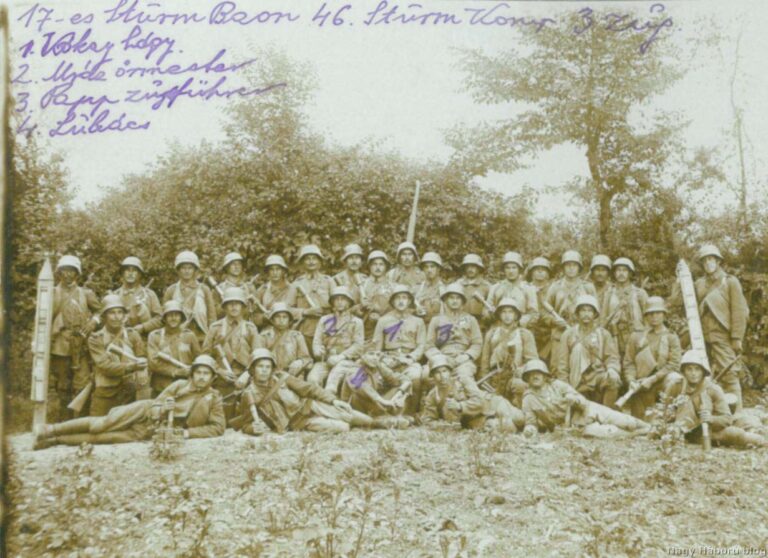
He took part in the Serbian campaign and the capture of Šabac. He trained volunteer gunners at Komárom. From May 1915 he commanded a 24 cm battery on the Karst and on the Krn. In November 1915 he was awarded the Military Merit Cross, 3rd class. Even at the front he went on doing science: he devised a method for locating enemy batteries by sound triangulation from three positions.
The autumn of 1915 found him in the epidemic hospital in Klagenfurt with typhus. The Faculty Council tried to use his convalescence to have him permanently exempted. Zemplén’s answer was clear-cut, and it was published by the Budapesti Hírlap:
Győző Zemplén · letter to a friend · Klagenfurt, autumn 1915
“I have the firmest and most irrevocable intention of fighting this war honourably to the end. I have done fourteen months, I cannot give up right at the end!
And if my friends obtained a permanent exemption for me at the ministry, I would simply not accept it…”
— Győző Zemplén, Klagenfurt, autumn 1915
Reading these words, one thought comes naturally: how many men in that war had every reason to stay at home — and chose not to? Not out of recklessness, not out of rhetoric, but because the sense of duty was something concrete, deep-rooted, impossible to betray.
Zemplén was not a professional soldier. He was a physicist, an academic, a man of books and laboratories. Yet he felt part of something greater. That silent loyalty, without proclamations, is perhaps the hardest thing to understand today — and the most precious to remember.
29 June 1916: death on the plateau
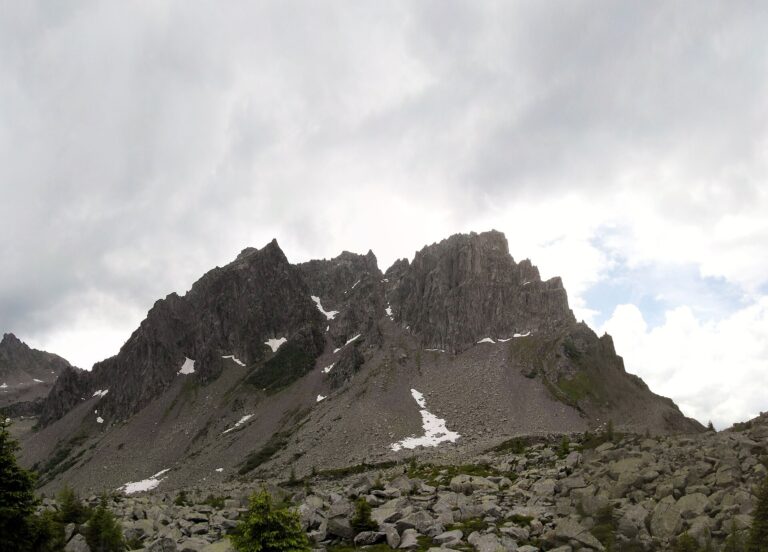
It was the feast of Saints Peter and Paul. Zemplén was at the observation post on Monte Dorole, on the Asiago plateau. The Italian artillery opened fire. A shrapnel shell burst above their heads.
Zoltán Kalmár was there. A student at the Budapest Polytechnic, assigned to the same unit as his professor, he wrote everything down in his diary. It is the most direct testimony we have:
Zoltán Kalmár · diary · 29 June 1916
“29 June 1916. Feast of Peter and Paul, one of the saddest. We got up around 8.30 in good spirits. The lieutenant asks me: ‘What does it mean if Peter and Paul is a fine sunny day?’ I answer: ‘It will end badly!’
We were drinking cognac. I was behind a fir tree when a horrible shrapnel shell burst above our heads. At first I thought it was nothing serious — others had passed just as close before — but the lieutenant cried: ‘Alas, I am dead!’ and blood was pouring from his chest.
He spun round two or three times and fell, pale. The shrapnel had hit him in the abdomen and the lung.
Now the news arrives: Lieutenant Zemplén died between 3 and 4 p.m. I truly grieve for him. He leaves five small children and a young wife.”
— Zoltán Kalmár, war diary, 29 June 1916
Taken to the military hospital at Ghertele, Győző Zemplén died that same afternoon. He was buried provisionally the following day; his remains were later repatriated and laid to rest in the Farkasréti cemetery in Budapest on 16 July 1917.
Zemplén’s death struck like a national bereavement. The Council of the Polytechnic held an extraordinary session on 4 July 1916 entirely devoted to his memory. His colleague Géza Laczkó wrote in the review Nyugat:
Géza Laczkó · obituary · Nyugat, 16 August 1916
“A profound mind, a serene soul, an almost irrepressible temperament that at times bordered on wildness, a spirit in perpetual motion — these were his qualities, of which the years had only smoothed the edges, but which had never changed.
Those who knew him truly believed in the inexhaustible vitality of Jókai’s great heroes. He was made of the same stuff.”
— Géza Laczkó, Nyugat, 16 August 1916
A hundred years on: the memory that unites
The monument unveiled near Asiago in February 2026 is not just a tribute to one man. It is a sign that true historical memory knows no national borders.
Italians and Hungarians, once on opposite sides of the front on these very mountains, came together to honour those who did not come back from that war.
Zemplén’s youngest daughter, Jolán (1911–1974), followed in her father’s footsteps: she became a physicist and historian of physics, and in 1967 she was the first woman to hold a chair of physics in Hungary. Her father’s theorem still lives in theoretical physics textbooks. His name now also lives on a stone on the Asiago plateau.
A reflection…
When I read the story of Győző Zemplén, I stopped several times. Not because it is an exceptional story — wars are full of similar stories. I stopped because it is a story that is true in the fullest sense: a man who could have saved himself, and chose not to.
And it struck me that, a hundred years later, the ones remembering him were two nations that had fought each other on those mountains. Not with rhetoric, not with solemn speeches, but with a simple monument, unveiled by people who had sought each other out, found each other and said: this man deserves to be remembered.
Perhaps this is the deepest meaning of historical memory: not to celebrate war, but to give back a name and a face to those who suffered it — whichever side they were on. And doing it together, Italians and Hungarians, on these mountains of ours, is worth more than any official ceremony.
Michele Sacchet
Salce Alpini Group
Sources: Nagy Háború Blog (nagyhaboru.hu) · Original text by Péter Selmeczi, 19 March 2026 · Photo archive Sándor Palace / Gyula Bartos.
Cover photo: Tamás Sulyok, President of Hungary, and Luigi Martello, mayor of Roana, unveil the memorial plaque to Győző Zemplén on 23 February 2026. (Source: Sándor Palace/Gyula Bartos.)
To continue this journey through historical memory: www.gruppoalpinisalce.it/en
Related article: When the Hungarians reached the Piave.