
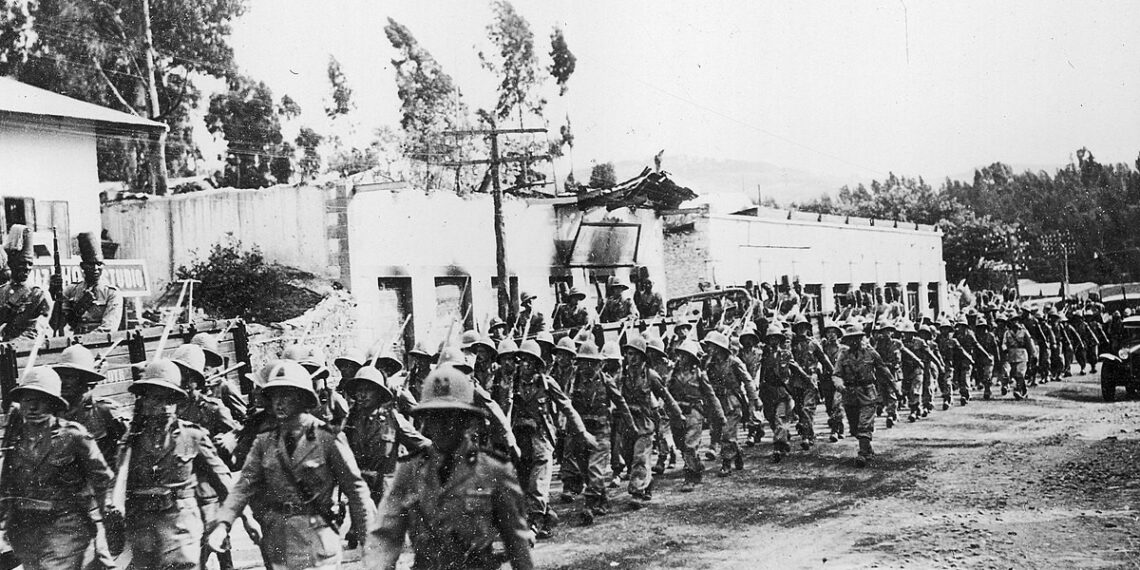
There are dates which, reread many decades later, take on a meaning very different from the one they held for those who lived through them. 3 October 1935 is one of them: on that day Italian troops advanced from Eritrea and began the invasion of Ethiopia, opening a colonial war of aggression that would leave its mark on the country’s history — and which, albeit indirectly, also entered the homes of a small mountain village such as Salce.
In those years Italy was under the Fascist regime. The conflict that opened in the Horn of Africa was no ordinary war: it was sought and prepared by Mussolini’s government as a venture of prestige and colonial expansion, and historians today also stress its gravest aspects, including the use of chemical weapons and the extremely harsh repression of the Ethiopian civilian population. Alpini units, trained for mountain warfare, were also deployed in that African campaign; and it cannot be ruled out — although it all remains to be verified — that the soldiers sent to East Africa included men from Salce or the neighbouring villages.
These events, in the language and with the sensibilities imposed by the period, were also covered by La Voce Amica (“The Friendly Voice”), the small parish newsletter of Salce. This article draws on the historical archive of that newsletter: reproducing its words today does not mean endorsing them, but preserving them as a record of how a small community in the Belluno area perceived the great events of history eighty years ago.
The war enters the homes of Salce
On 3 October 1935, at first light, the Italian armed forces deployed in Eritrea crossed the border and entered Ethiopian territory without a formal declaration of war. So began what history would call the Ethiopian War: a colonial conflict fought by a European state, Fascist Italy, against an independent and sovereign African nation.
The news quickly reached even the villages furthest from the big towns, carried by the newspapers, the radio and the propaganda of the regime, which in those months demanded almost total support for the war effort from Italian families. In Salce too, a small hamlet in the Belluno area, the African war entered conversations, prayers and the pages of the parish newsletter.
La Voce Amica, the parish newsletter that had accompanied the life of Salce’s families since 1927, also reported the events of October 1935. Those pages are today a valuable source for understanding how a small community near Belluno received the news coming from Fascist Italy and from the colonial war.
The Alpini too left for Africa
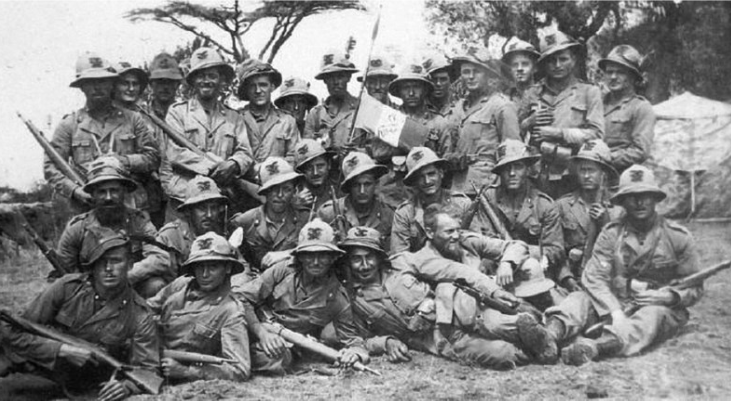
The Ethiopian campaign also involved Alpini units, units created and trained for war in the Alps but deployed instead in the heat, the dust and the high altitudes of the Ethiopian plateau: a contrast that many veterans remembered as one of the most disorienting aspects of that experience. Among the large Alpini formations involved was the 5th Alpine Division “Pusteria”, formed at the end of 1935 and engaged from the early months of 1936 in some of the hardest battles of the campaign, from the Tembien to Amba Aradam, up to the entry into Addis Ababa in May of that year.
Whether the Alpini sent to East Africa included men from Salce or the neighbouring villages remains a chapter still to be explored — and it could be worth doing so in future, through military archives and service records. Lacking, for the moment, any direct sources to confirm it, it is not possible to state that there were certainly men from Salce in those units: it is a line of research, not an established fact.
The war as told by the regime
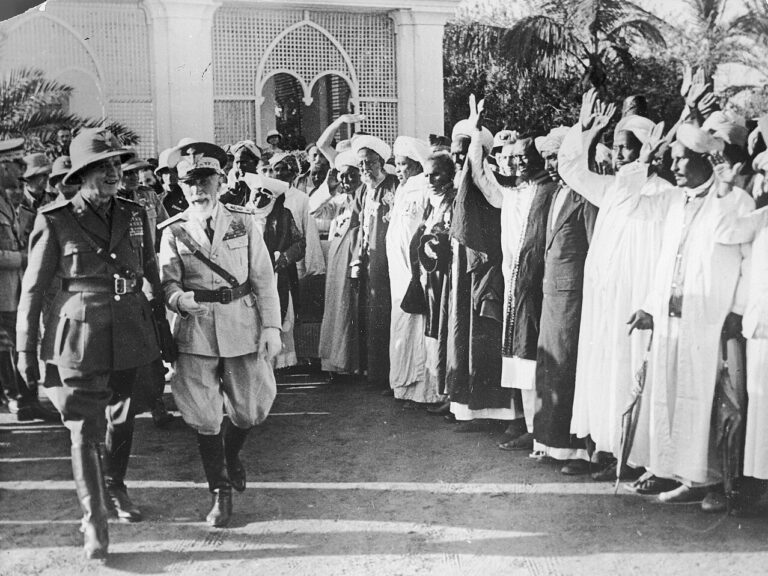
The Fascist regime did not allow the Ethiopian War to be reported freely. The press, the radio and newsletters of every kind — including parish ones, which nonetheless moved within a space of their own, made up of religious and community life — inevitably felt the climate of consensus imposed and sought by those in power. The words used to speak of “civilisation”, of the “enterprise” and of the “greatness of the Fatherland” were those put into circulation by official propaganda, and it was in that language that La Voce Amica of 3 October 1935 also reported events to its readers.
It must be said clearly, and it bears repeating: modern historiography today judges that war very severely. It was a colonial war of aggression against an independent state, waged with methods that international law already prohibited at the time.
Reading those words without erasing them
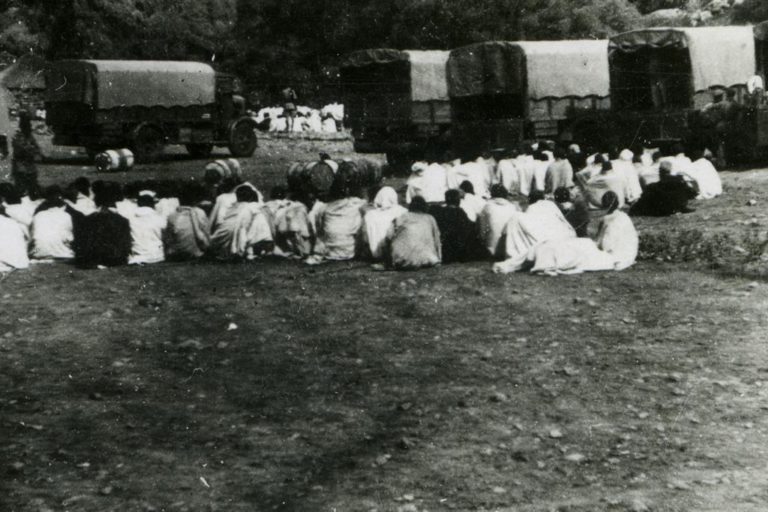
Reproducing today the language used in 1935 does not mean sharing its spirit or its propaganda. It means preserving a document and understanding how the war was reported and perceived in a small Italian village under the Fascist regime.
It is a distinction worth holding firmly. A parish newsletter from 1935 cannot be read through the eyes, let alone the judgements, of the present: it was written by people immersed in a political and cultural climate that in practice left no room for any account other than the official one.
Erasing those pages, or rewriting them to make them more acceptable, would mean losing the chance to truly understand how consent to Fascism worked in the daily life of a small village — and how hard it was for those living in Salce in 1935 to gain access to any point of view other than the one imposed by the regime.
What did they really know in Salce?
It is a question that is hard to answer with certainty, and it is right not to push the sources beyond what they can tell us. The families of Salce read the parish newsletter, probably listened to the radio when one was available, and received news second-hand through the accounts of those returning from the larger towns.
They could hardly have known the real extent of the violence the war was producing in East Africa: the regime’s censorship, combined with the physical and cultural distance from Ethiopia, made independent and verified information almost impossible.
What we do know, on the other hand, is how that war was told: in patriotic tones, with emphasis on the civilising mission, in a language we now immediately recognise as propaganda. This is precisely where the historical value of the Salce newsletter lies: not in the information it offered about the real war, but in the evidence it provides of how Fascism presented itself to a small mountain community.
From the Salce newsletter to our memory
Rereading today the pages of La Voce Amica — and in particular the issue of 3 October 1935, now available in the newsletter’s digital archive — is a small but valuable exercise in historical memory. Not to judge with hindsight those who were writing in those years, but to understand how the great events of history, with all their weight, reached a small village near Belluno through the pages of a simple parish sheet.
For anyone wishing to learn more about the part played by the Belluno Alpini in the conflicts of the twentieth century, we refer you to the History of the Alpini section of our website, and in particular to the article The Sons of Belluno at War, devoted to Belluno’s 7th Alpini Regiment. As noted in this very article, it remains a goal for the future to verify, through military archives, whether men from Salce also took part in the Ethiopian War.
Sources and further reading
- La Voce Amica, parish newsletter of Salce, 3 October 1935 – view the issue
- Digital archive: bollettinisalce.com
- Treccani, Enciclopedia Italiana – entry «Guerra italo-etiopica» (Italo-Ethiopian War)
- 5th Alpine Division «Pusteria» – military historical sources (Italian Army, Associazione Nazionale Alpini)
- Istituto Nazionale Ferruccio Parri – studies on the Ethiopian War and the use of chemical weapons in East Africa
- Cover image: Italian troops marching in Ethiopia (Photo: Istituto Luce)


