📚 SALCE AT HEART
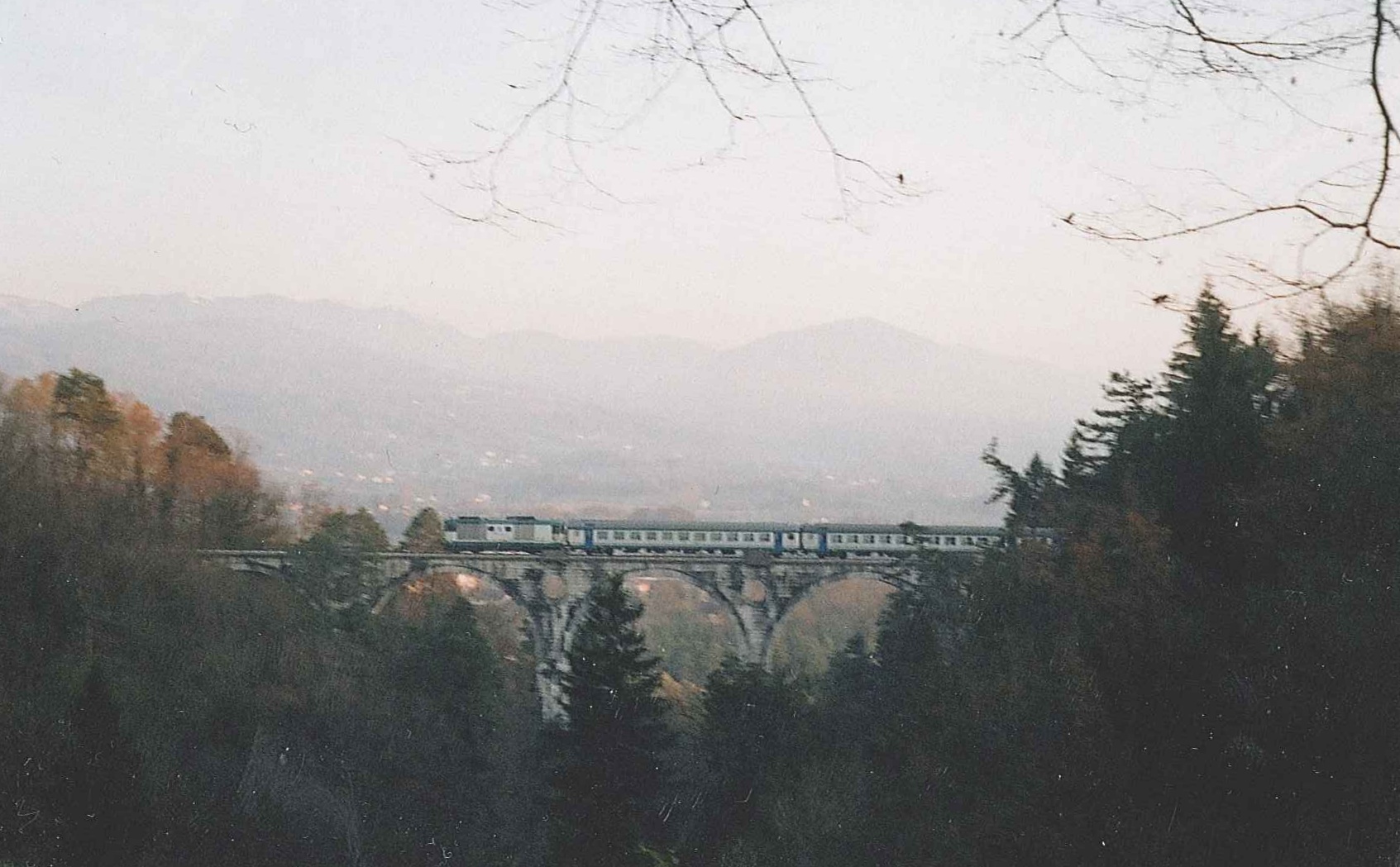
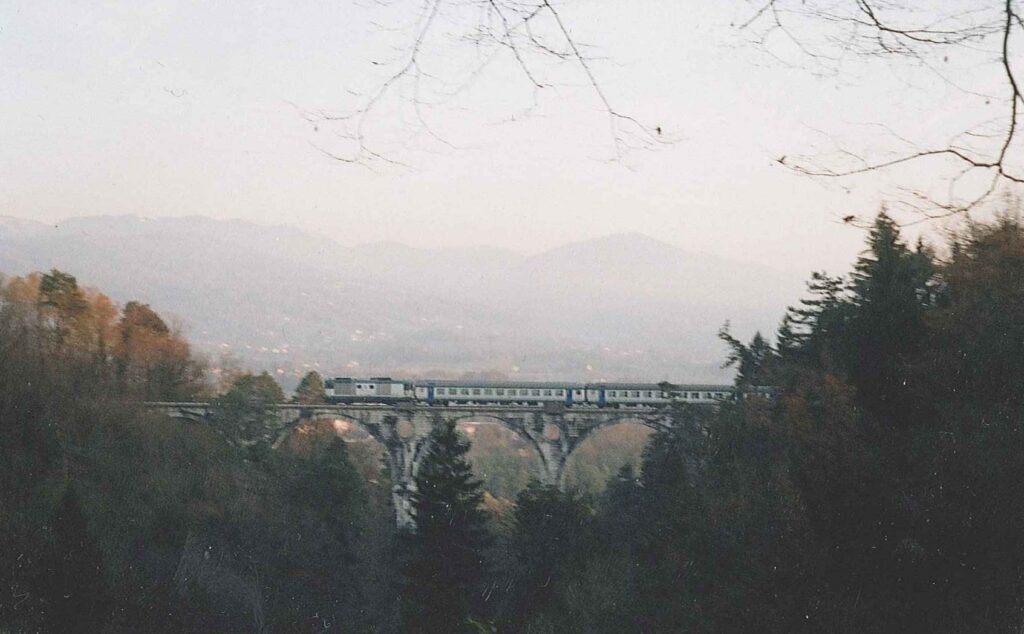
At San Fermo, among the woods of Socchieva, an arched viaduct crosses the valley of the Siva stream. Armando Dal Pont told its story in the Col Maòr: a story of trains, war, work and fear.
“The train went by, and then… the bombs!”
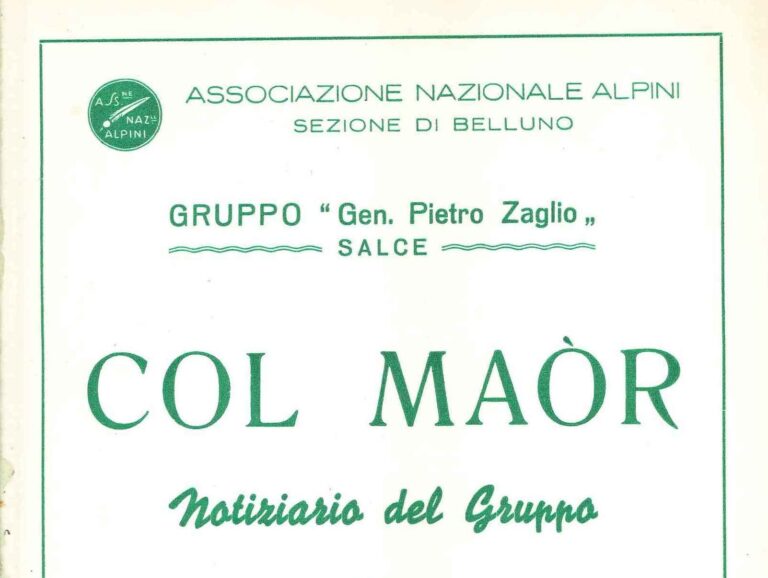
It was the early afternoon of St Stephen’s Day 1944, a clear winter day. Armando Dal Pont was five years old, out with his parents below the houses of Chiaramada di Salce, beyond the level-crossing keeper’s house, when a goods train passed towards Belluno. Then, from Col Visentin, came the fighter-bombers: “perhaps 5”.
His mother swung him onto her back, slipped on the path and injured her leg. He was unhurt, and together with his father they took shelter in a hollow in the ground. The planes were after the Val di Siva bridge, “which, however, was not hit (it was the only attempt)”. Dal Pont told the story of that afternoon in the 2009 Col Maòr, and the records bear him out: the diary of the Provincial Anti-Aircraft Protection Committee notes, on 26 December 1944, “overflight and bombs dropped on the Siva Bridge (Belluno)”, with “minor damage”.
Dal Pont later pieced together in the Col Maòr the whole story of that viaduct, whose arches cross the valley of the Siva among the woods of Socchieva: a story of trains, war, work and fear.
A celebration “of the nobleman and of the craftsman”
It all begins on 10 November 1886, with the opening of the Treviso-Belluno railway. Dal Pont quotes don Bruno Bersaglio: it was everyone’s celebration, “of the nobleman and of the craftsman”. The viaduct over the Siva stands “next to the park of Villa Pagani-Gaggia at Socchieva di San Fermo, now part of the parish of Salce”.
The first bridge was made of iron. A late nineteenth-century guidebook quoted by Dal Pont describes it as a metal girder viaduct in three spans on two iron columns, 120 metres long and 47 metres high above the valley floor. Another guide of the time suggested the “walk to the Siva bridge (an hour and a half)” and called it “perhaps the finest structure on our railway line”.
The last train
Thirty-one years later, Dal Pont tells us, that bridge was blown up. After Caporetto, he writes, “all the railway bridges were blown up”. A newspaper of the time noted that the last train passed through Feltre at 9 am on Saturday 10 November 1917; shortly afterwards the bridges went up. A 1934 technical book, “Italian reinforced-concrete bridges”, also states that the old iron bridge was “blown up by our Army in the retreat of November 1917”.
Prisoners, women and concrete
When the war was over, everything had to start again. The weekly “L’Amico del Popolo” of 5 April 1919 asked that the prisoners, working “in the mud and in the rain”, be given food and clothing. In May 1919 the works were entrusted to Società Odorico & C. of Milan, which set up a small yard north of the viaduct: two huts and two sidings. Working there were “also prisoners of war and women from the surrounding area”.
The new bridge was built without scaffolding. Materials came across on trolleys running on a cableway stretched over the valley, while two ropeways brought gravel from the Piave: a job which, according to Dal Pont, was given to women alone. The result was a concrete viaduct with five semicircular arches spanning 20 metres each, 145.80 metres long and about 52 metres high above the bottom of the gorge. It opened to traffic in September 1920. A plaque still records the rebuilding by the Odorico company.
Around the bridge
San Fermo is not just the bridge. On 28 October 1934 the house of the Opera Nazionale Dopolavoro — the Fascist-era workers’ recreational organisation — was inaugurated there in the presence of minister Francesco Ercole: a photograph bears the words “Inauguration of the Dop. house S. Fermo 28 Oct. 1934”. After the war it became an ENAL club and the meeting place of the hamlet; once ENAL was abolished it passed to the Municipality of Belluno and today, according to the 60th Anniversary Book, it stands abandoned. Not far off is Villa Pagani-Gaggia at Socchieva, with its park and small lake. And since 30 June 1986 the parish of San Fermo, once the “parish of Baldeniga”, has been united with that of Salce.
The child from Chiaramada grew up to go looking for his village’s memory house by house. At the exhibition for the Group’s 40th anniversary in 2004, among the roughly three hundred images of Salce and San Fermo collected by Armando Dal Pont, there were photographs of these events too. The Odorico arches, meanwhile, still stand over the Siva valley: the same arches the planes failed to hit that St Stephen’s afternoon.
When the sources do not agree
- Who destroyed the bridge, and when. Dal Pont and the 1934 book speak of our army retreating in November 1917. The 60th Anniversary Book, with a period postcard, says the bridge was destroyed by the retreating Austrians at the end of October 1918.
- The temporary bridge. Dal Pont places a temporary wooden bridge upstream, after the war; the 1934 text he himself quotes speaks of temporary girders with which “the Austrians had restored traffic”.
- Minister Ercole. The name “Francesco Ercole” is documented by the captions of the 2004 exhibition; his office in 1934 still needs checking.
Help us remember
- Who keeps photographs of the iron bridge or of the 1919-1920 rebuilding?
- Who remembers the Dopolavoro house and the ENAL club at San Fermo?
Write to us from the Contact page: every contribution will be checked and, if confirmed, will enter MEMORIA. More places of Salce are in the Places of memory section.